Why 'Perfect' Fabric is Actually a Design Failure
Perfection is perceived to be the final goal in the contemporary fashion industry. The fabrics should be perfect, symmetrical, and the same in every inch. However, in the context of classic Indian textile, particularly the handloom artworks, this concept of perfection may, in fact, represent an absence.
Authentic heritage fabrics should not appear to be machine perfect. They are supposed to bear the narrative of the mule, the handyman and the gradual beat of weaving. What most people term as "imperfections" are the signs of authenticity and artisanship that can never be replicated by machines.
At Sutra Art of Clothing, we understand that the beauty of handloom lies in its uniqueness. Each thread that is woven has tiny variations that enable the fabric to be unique, living and very human.
The Myth of the Perfect Fabric
Industrial textile production has conditioned us to believe that good fabric must be perfectly uniform. But this belief comes from machine-made manufacturing where fabrics are designed to be identical.
Handloom textiles work very differently.
A handloom weaver manually controls every movement of the thread. Due to this human intervention, the slight variations are bound to emerge. Rather than presenting imperfections, these differences make texture, depth, and personality.
Here’s why the idea of perfect fabrics can actually signal a design failure in traditional textiles:
- Machine-made fabrics prioritize uniformity over character.
- Synthetic perfection removes the human element from the textile.
- When every meter looks identical, the artistry disappears.
- When subjected to industrial standards, cultural heritage textiles lose their distinctive nature.
To put it briefly, a handloom piece that appears to be overly perfect usually was never a handloom work.
Why Handloom Imperfections Are Beautiful
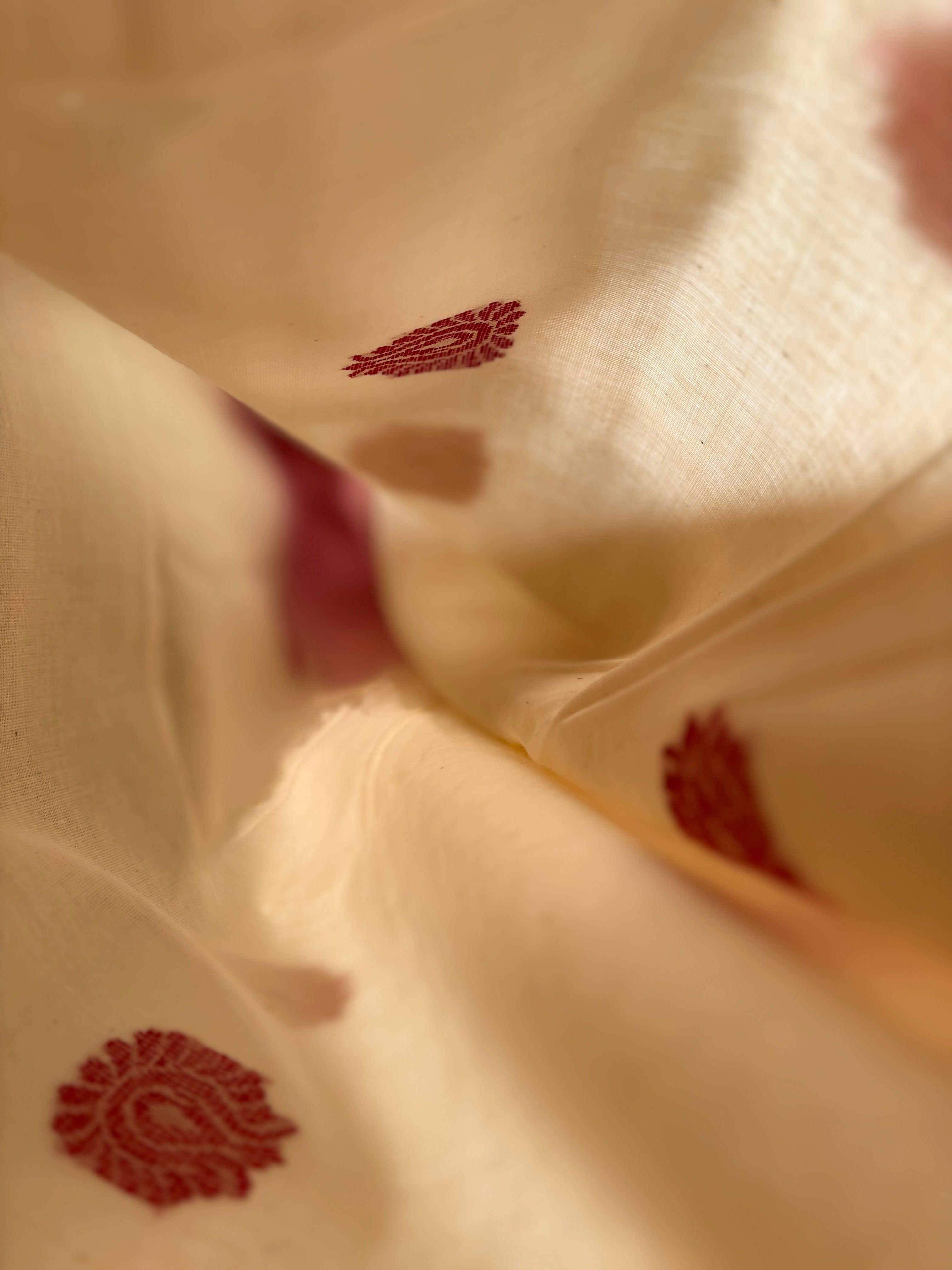
When you take a very closer look at a handwoven piece of cloth, you can observe small flaws. These could be in the form of minor differences in the yarn thickness or minor changes in the pattern alignment.
It is these properties that make handloom textiles special.
Hand woven fabric embraces personalism. Two pieces could never be exactly alike. Every saree or dress fabric turns out to be a unique piece of art.
The most renowned aspects of handloom textiles are:
-
Thread variations: Slight differences in weave density.
-
Organic patterns: Subtle pattern shifts created by manual weaving.
- Slubs: Small thick spots in the yarn that add texture.
This thought perfectly catches the beauty of the handloom textiles:
“The 'slubs' in your handloom saree aren't mistakes—they are the rhythmic heartbeat of the loom. In a world of carbon copies, be the beautiful irregularity.”
These details make every piece unique and emotionally valuable.
The Human Touch Behind Every Thread
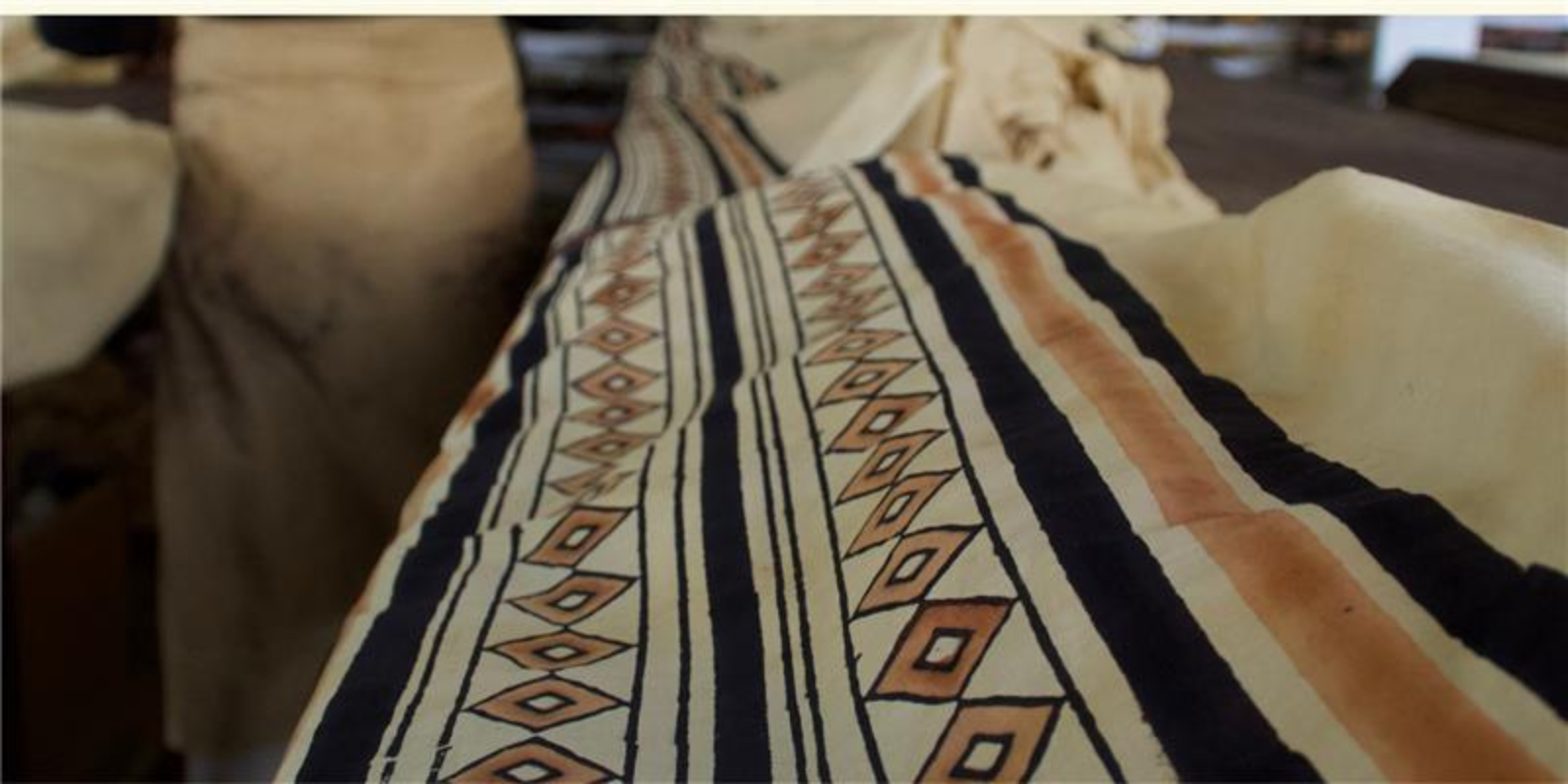
Handlooms do not work like powerlooms, it is important to note that they need hands of craftsmen to twist each thread.
The process involves:
- Preparing the yarn by hand
- Setting up the loom manually
- Coordinating warp and weft threads with foot pedals and hand movements
- Maintaining pattern consistency without digital assistance
Because of this manual effort, the fabric develops a natural rhythm. The slight variations in weaving reflect the weaver’s hand movement and timing.
At Sutra Art of Clothing, this human element is celebrated rather than hidden. It reminds us that clothing can carry stories, not just style.
Jamdani: A Perfect Example of Imperfect Beauty
Jamdani is one of the strongest examples of why perfection is not the point among the most respected handlooms traditions in India.
Jamdani weaving is an art where additional threads are weaved on the underlying cloth to form beautiful patterns that seem to be floating on the ground. This process demands lots of patience and accuracy.
Unlike machine weaving, the motifs are created manually without automated guides. As a result:
- Slight spacing differences may occur
- Motif placement may vary subtly
- The weave density can shift gently across the fabric
These natural changes make Jamdani textile feel alive.
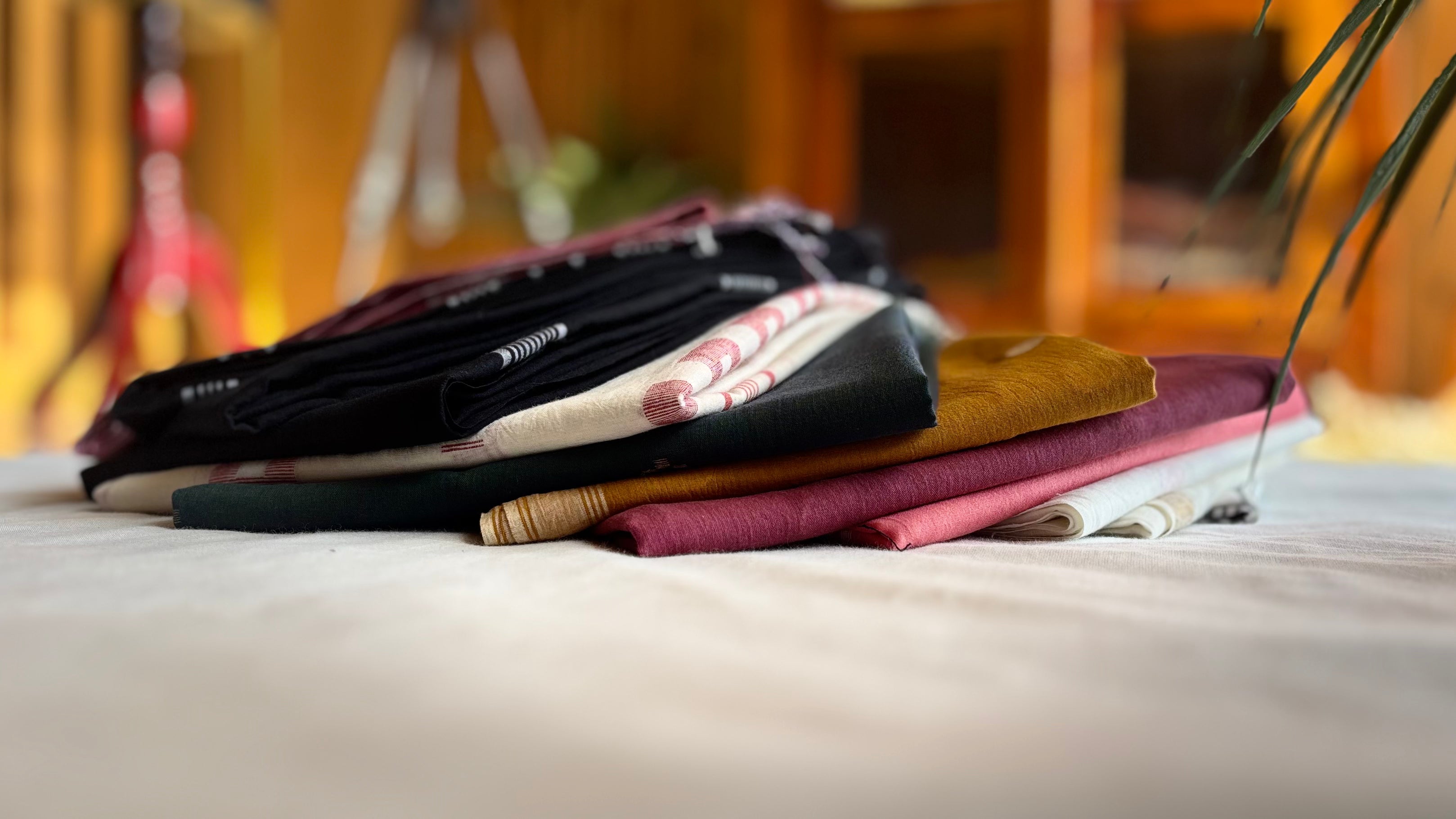
That is why works such as Jamdani Dress Material have a great demand among textile lovers. The designs are all handmade, so no two designs will ever be the same.
Rather than resembling a factory product, Jamdani looks like a breathing textile legacy which has traveled down to generations.
Machine Perfection vs Handloom Authenticity
Understanding the difference between machine perfection and handloom authenticity helps buyers appreciate traditional textiles more deeply.
Machine-made fabrics
- Uniform thread thickness
- Identical patterns across meters
- Smooth, overly consistent texture
- Mass-produced with minimal variation
Handloom fabrics
- Natural texture variations
- Slight irregularities in weaving
- Unique patterns created manually
- Each piece carries artisan individuality
This difference is why experienced textile lovers often prefer handloom fabrics. The irregularities prove that a human hand shaped the fabric.
Why Perfect Fabric Often Means Power Loom
Ironically, buyers seeking flawless smooth fabrics that are completely free of any variation may end up getting products made by machines.
This is especially prevalent in the traditional textiles where power looms attempt to replicate handloom weaving.
Replicas made by machines eliminate the minor flaws that are used to signify genuineness. Consequently, they will become perfect but without the soul of the textile.
Knowing how to Identify Original Jamdani and other handloom fabrics assists consumers to value these distinctions and purchase wisely.
Authentic works will always have slight variations in them since they are not produced with computer controlled machines.
Appreciating the Beauty of Irregularity
Contemporary design thinking is putting more emphasis on genuineness and uniqueness rather than artificial perfection. This transition is in line with conventional Indian textiles.
Handloom fabrics naturally represent sustainable and slow fashion values.
Here’s why irregularity is now celebrated in global design:
- Distinct products are conspicuous in a mass-produced world.
- Hand-made products have a sentimental touch.
- Textiles transform to narrative objects instead of commodities.
- Cultural heritage is maintained.
By putting on handloom fabrics you are wearing history, craft, and identity that have been crafted into one.
The Sutra Art of Clothing Philosophy
At Sutra Art of Clothing, all the fabrics are selected based on genuineness and cultural meaning. Instead of pursuing artificial perfection, the brand aims at maintaining the natural essence of handloom weaving.
This philosophy embraces:
- Artisan-made textiles
- Traditional weaving techniques
- Slow fashion principles
- Heritage textile revival
The history of the weaver, the loom and the people who have passed down these traditions across generations all are represented in every piece of fabric.
By admiring the beauty of imperfection, we again get in touch with the actual sense of craftsmanship and culture.
Conclusion
When everyone is obsessed with perfect surfaces and perfect products, handloom textile reminds us that the best thing about beauty is individuality. What could be seen as abnormalities are the signatures of originality, human work and cultural heritage. Once we abandon the search for machine perfection and start valuing the handmade details, we get back the soul of classic fabrics. By providing authentic textiles, Sutra Art of Clothing is inviting us to admire these gorgeous imperfections and wear stories that are as unique as the individuals who make them.
FAQ
1. Why are slight irregularities in fabric considered valuable?
Slight irregularities are a hallmark of authentic handwoven textiles. These natural variations show that the fabric is crafted by skilled artisans rather than produced by machines. At Sutra - Art of Clothing, we celebrate these imperfections because they reflect the artistry, patience, and human touch behind every piece.
2. Does an “imperfect” fabric mean lower quality?
Not at all. In handloom textiles, small variations in texture or weave actually indicate authenticity and craftsmanship. At Sutra - Art of Clothing, these details are seen as the beauty of handmade fabric, making every piece unique rather than identical like machine-made materials.
3. What are “slubs” in handloom fabrics?
Slubs are slightly thicker or uneven threads that appear naturally during the weaving process. They are not mistakes but signs of genuine handloom weaving. At Sutra - Art of Clothing, we often describe these slubs as the rhythmic heartbeat of the loom, adding character and individuality to every fabric.
4. Why should people choose handloom fabrics over perfectly uniform fabrics?
Perfectly uniform fabrics are usually machine-made and lack the charm of handmade textiles. Handloom fabrics carry a story, cultural heritage, and artisan skill within every thread. Sutra - Art of Clothing believes that these beautiful irregularities make each fabric more meaningful and timeless.