
The 2000-Year Journey of Jamdani Sarees: From Mughal Courts to UNESCO Heritage
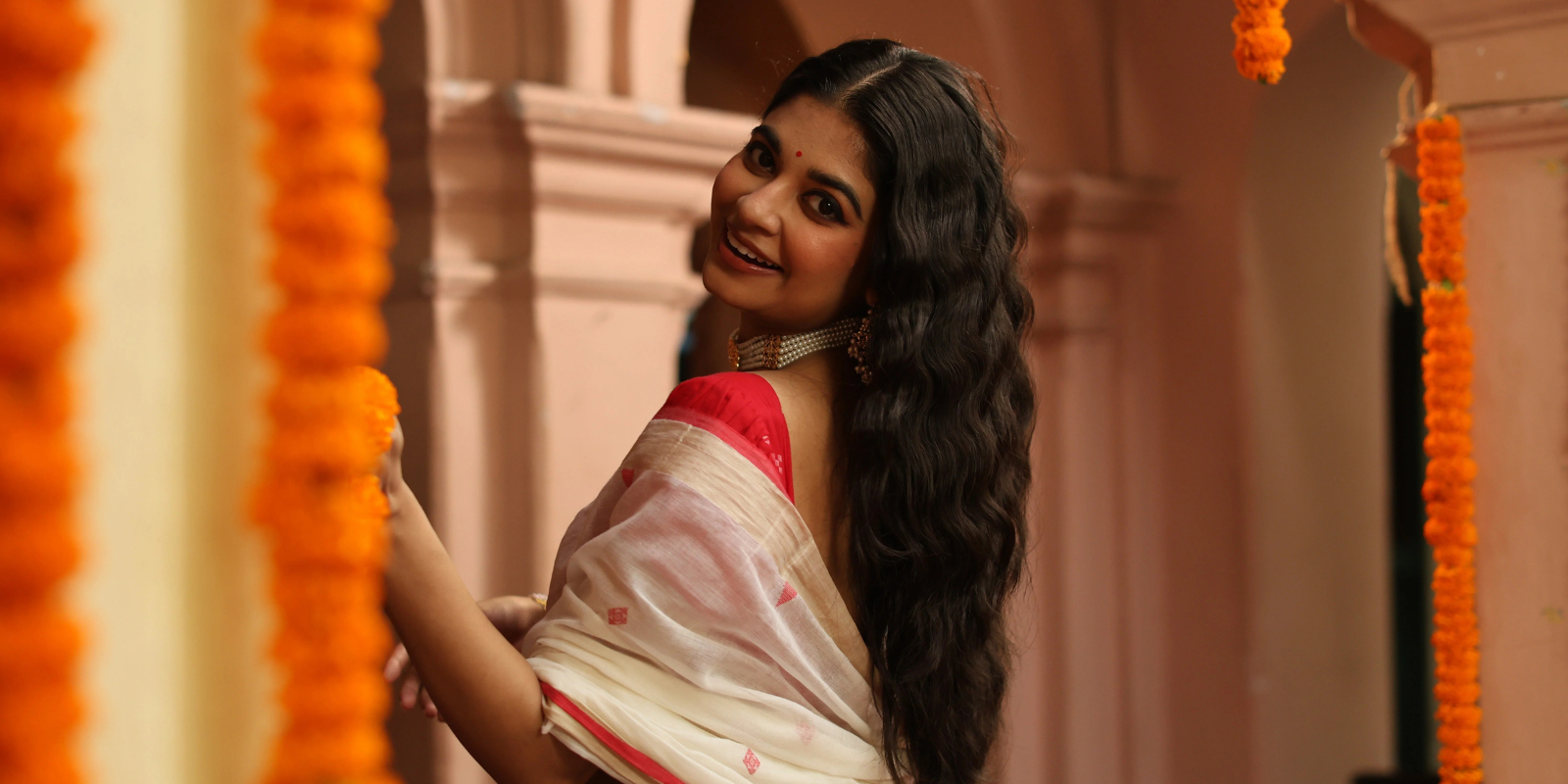
The jamdani saree is more than a clothing since it is over two millennia old but it is poetry in a piece of cloth. Light motifs on airy muslin, exquisitely crafted over time, and a tradition that cuts across empires and continents--Jamdani is not merely a weave, it is a heritage.
Sutra Art of Clothing shares this age-old tradition of introducing handloom weaves to the contemporary list of products in the modern wardrobe. In order to appreciate Jamdani to the utmost, we must trace this 2000-year course of the masterpiece, which began in the ancient Bengal, traveled to the palaces of the Mughals, was interrupted by the colonialism, and was restored its way niche into the midst of the UNESCO-recognized heritage craft.
Ancient Roots: The Birth of a Timeless Weave
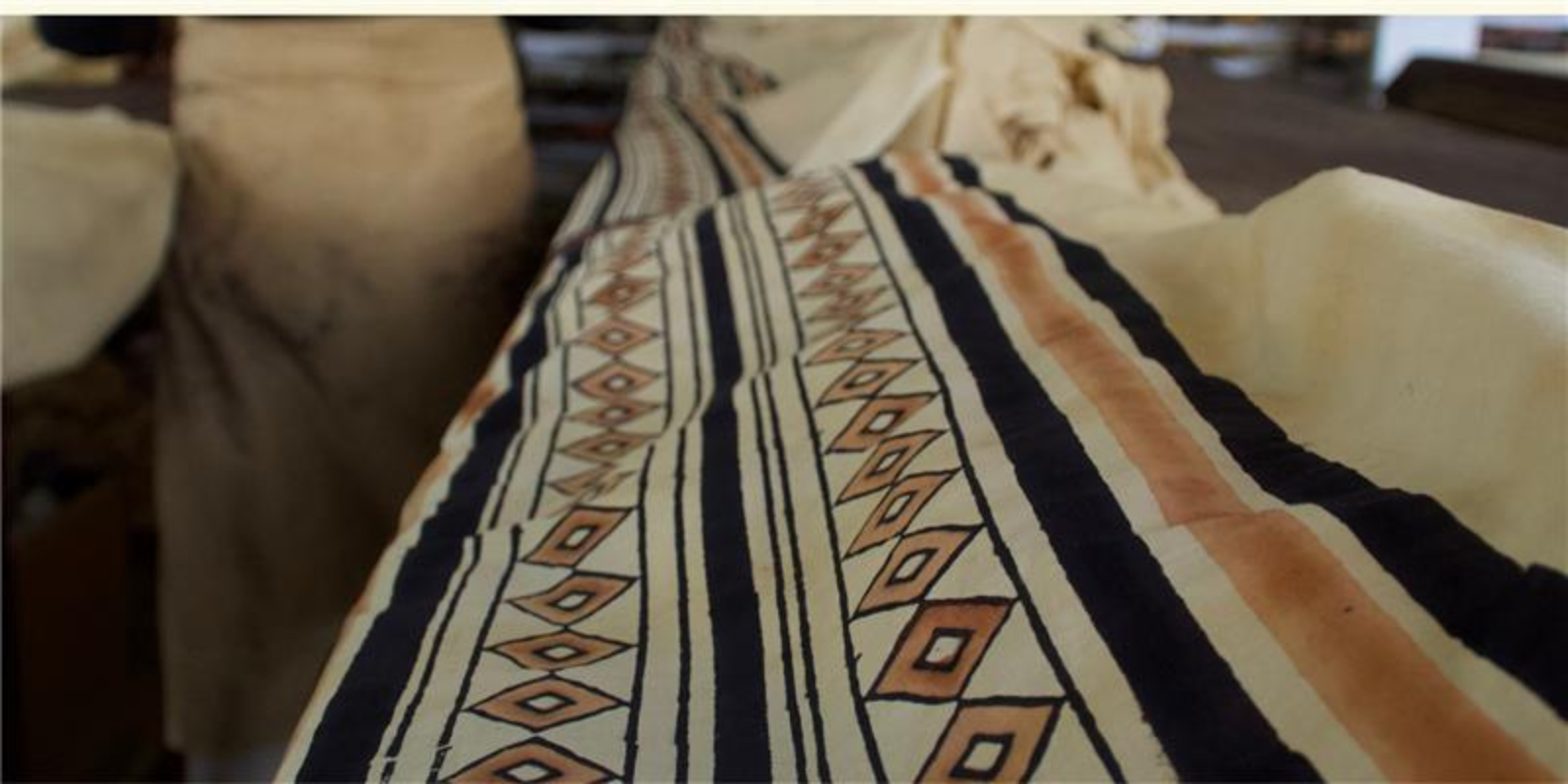
Jamdani takes place in the fertile plains of Bengal which was the historically known as the place where the world made the best muslin. Travelers of the ancient world wrote about lightweight fabrics that were considered to be woven air. From this muslin tradition emerged Jamdani—a weaving technique that elevated textiles into art.
What Made Early Jamdani Unique?
- Ultra-fine cotton muslin base
- Motifs inserted by hand using a discontinuous weft technique
- Blooming, geometrical and nature inspired patterns.
- Completely manual, memory-based weaving
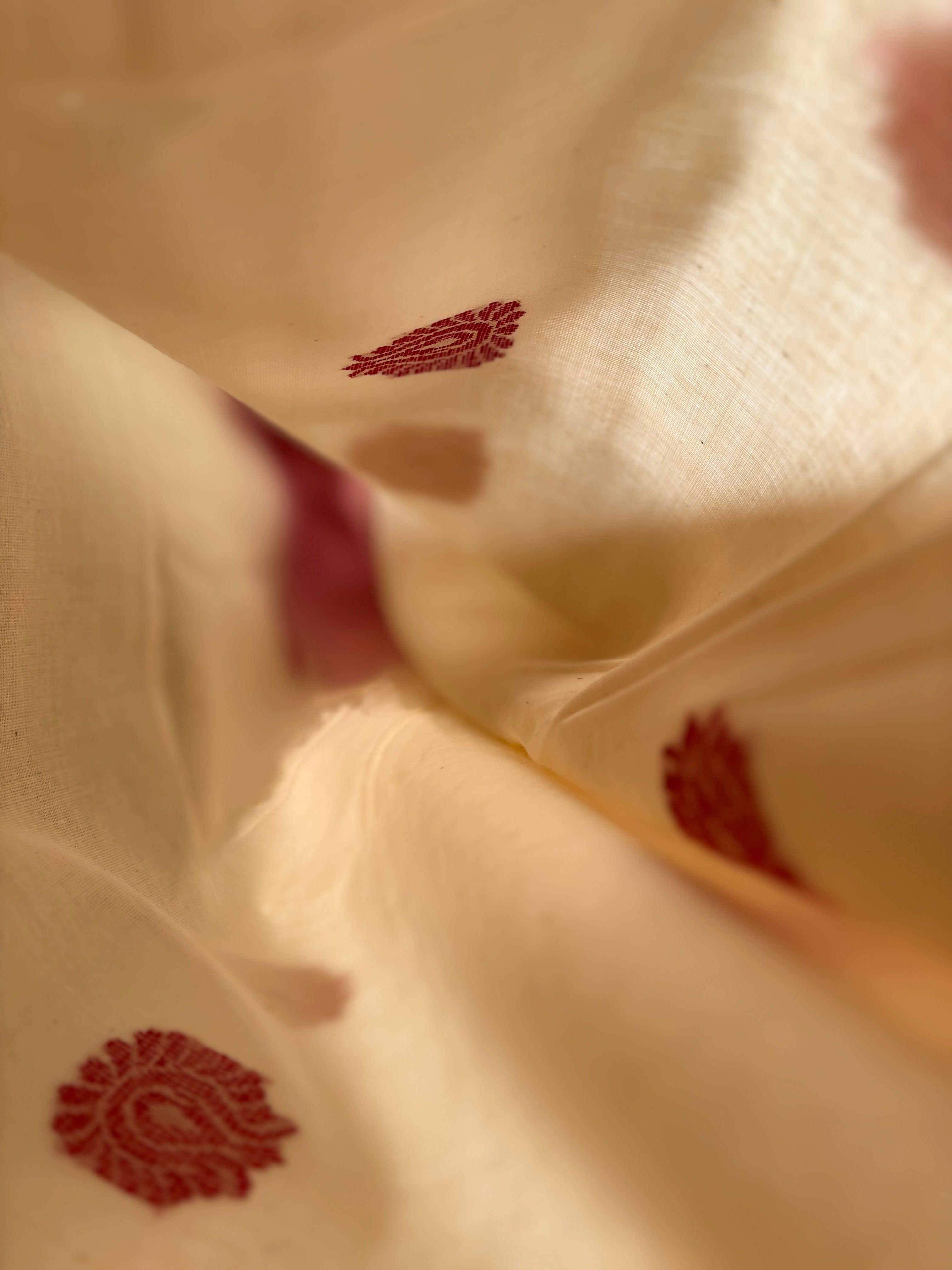
In contrast to printed textiles or embroidery, Jamdani patterns are done on the fabric fabric. This brings each piece structurally united and extremely strong even though it looks so delicate.
The Mughal Era: Royal Patronage and Prestige
The Mughal Empire was the best period of Jamdani. It was the perfect taste of emperors like Akbar and Jahangir, and after being a symbol of royal patronage, it became the status symbol.
Why Mughal Courts Valued Jamdani
- Feather-light fabric suited royal comfort
- Persian-inspired floral aesthetics
- Exclusivity reserved for nobility
- Strong export demand across Asia and Europe
Possession of original jamdani saree during this period was a symbol of status. It was so fine that European merchants were astonished at it, frequently fantasizing about how thin fabric might be so fine it could go through the ring.
Royal ateliers promoted the best master weavers and their designs could become increasingly elaborate with geometric patterns such as floral vines, paisleys and symmetrical patterns thriving during this golden age.
Colonial Disruption and the Fight to Survive
With the introduction of British industrialized textile in the 18 th and the 19 th century, the weaving societies in Bengal were devastated. Wearing fabrics which were made by machines were cheaper and quicker to make.
Yet Jamdani survived.
How the Tradition Endured
- Knowledge preserved within weaving families
- Rural artisan clusters continuing handloom practices
- Cultural identity tied to textile heritage
- 20th-century revival movements restoring recognition
Jamdani saree in the hands became a symbol of strength - evidence that art can survive even through economic pressure and political pressure.
UNESCO Recognition: A Global Milestone
In 2013, UNESCO recognized Jamdani weaving as an Intangible Cultural Heritage of Humanity. This recognition established its presence in the history of the world culture.
The recognition celebrated:
- The intricate handloom technique
- Generational knowledge transfer
- Cultural continuity
- Artistic excellence
This honor revitalized international interest and encouraged preservation efforts across weaving communities.
The Art of Weaving: A Diligent Daimonic Process.
The jamdani weaving process is a tedious one and demands enormous concentration.
How a Jamdani Saree Is Created
- Preparation of fine cotton or silk yarn
- Setting the base weave on a handloom
- Insertion of motifs manually using small spools
- Counting threads meticulously for pattern precision
- Weeks or months of dedicated work
Two craftsmen are frequently seated one beside the other at the mule, and have no printed directions they follow--most patterns are only in their heads.
This grueling work is the reason why the jamdani saree price is a matter of art, time and tradition as opposed to mere material expense.
The Shift from Cotton to Silk
Traditionally crafted in cotton muslin, Jamdani has evolved to embrace silk variants that enhance richness and drape.
Popular Variations Today
- Pure cotton Jamdani
- Silk-blend options
- jamdani silk saree
- Contemporary reinterpretations
Silk adds sheen and structure, making it a favorite for weddings and formal occasions while preserving the integrity of the weaving technique.
A Palette of Meaningful Colors
Early Jamdanis can be described as white-on-white with a texture rather than color. The designs today are in a wider range but still have the traditional elegance.
- red jamdani saree - It is a saree that is mostly worn during weddings and other auspicious occasions.
- black jamdani saree – A bold, modern interpretation perfect for evening elegance
- Pastels for daytime sophistication
- Jewel tones for festive grandeur
Each color transforms the same weaving technique into a different narrative.
Jamdani in Contemporary Fashion
Modern fashion has embraced heritage textiles with renewed enthusiasm. Jamdani now appears in:
- Wedding trousseaus
- Corporate events
- Cultural festivals
- Global fashion showcases
Women wear these sarees in a modernized way using blouses, structured drapes and even mixes. As more people are able to access it in jamdani saree online stores, the global audience is now able to encounter this heritage weave directly.
Yet, authenticity is a major factor. Not all the products that are called Jamdani are really hand woven.
How to Identify Authentic Jamdani
As demand rises, machine-made imitations have entered the market.
Signs of a Genuine Piece
- Slight irregularities in motif placement
- Floating threads visible on the reverse side
- Soft, breathable texture
- Evidence of handloom weaving
A true Jamdani reflects human touch—subtle imperfections that signal authenticity rather than flaw.
The Enduring Value of Jamdani
Jamdani has survived for 2000 years because it adapts without losing identity.
Its lasting appeal comes from:
- Deep cultural roots
- Sustainable handloom production
- Artisan-driven creativity
- Timeless aesthetic versatility
Every Jamdani carries not just design but memory—of artisans, regions, and generations.
Conclusion: A Living Legacy Woven Through Time
Since the muslin looms of the ancient Bengal until the luxury of palaces of the Mughal kingdom, since the colonial misery to the UNESCO acclaim, Jamdani has had an unparalleled journey through the centuries and between civilizations. When you wear Jamdani today, you do not just get a piece of cloth; you get a piece of sturdiness, creativity, and heritage. At Sutra Art of Clothing we celebrate this incredible 2000-year voyage by selecting true pieces that serve as a bridge between the past and the present, and leave all weaves with their story to continue in the modern world without losing its perennial beauty that makes Jamdani.
FAQ
1. Why would a Jamdani saree be different than any other saree?
The peculiarity of Jamdani saree is that the patterns do not appear on the cloths either by printing or embroidery, but are directly woven into the cloth with the help of discontinuous weft technique. All motifs are hand-woven in a handloom thereby all saree are hand-made pieces of textile arts with a complex design and high resistance.
2. Why is Jamdani weaving recognized by UNESCO?
In 2013, UNESCO recognized Jamdani weaving as an Intangible Cultural Heritage of Humanity. This recognition celebrates the craft’s traditional handloom technique, generational knowledge transfer among weaving communities, and its cultural and artistic significance.
3. How long does it take to make an authentic Jamdani saree?
Making a typical Jamdani saree may require weeks and even months, depending on the complexity of the patterns and fabric. Every pattern is woven by craftsmen on a handloom and the motifs are counted and inserted over one another to create such a complex design.
4. What are the ways to determine a true Jamdani saree?
An authentic Jamdani saree would have slight disjointure on patterns and floating strands on the back side and a breathing texture. These characteristics mark the fact that the saree has been woven with the help of traditional handloom and not machines.