Buying Your First Authentic Handloom Saree Online? Read This First
Buying a first saree online could be enchanting. The colors, the drapes, the heritage stories - everything is beautiful on the screen. However, once you search for an authentic handloom saree online India, you can easily get overwhelmed with the results.
So how do you know what is real?
At Sutra Art of Clothing, we believe your first handloom saree should not just be a purchase — it should be an informed investment into tradition, artistry, and slow fashion. This guide will help you understand what “handloom” truly means, how to differentiate it from machine-made alternatives, and what to check before clicking “Buy Now.”
The Current Market: Why Buyers Feel Confused
The online saree market is flooded with options. From large marketplaces to boutique social media stores, thousands of sellers offer what they label as handloom sarees.
Here’s what most buyers don’t realize:
- Many sarees marketed as handlooms are actually powerloom-made.
- Digital print imitations replicate woven motifs at lower prices.
- Other products combine machine-woven fabric with hand-finished components.
- Prices differ tremendously without adequate explanation.
For a first-time buyer, everything appears authentic. The photography is elegant, descriptions are emotional, and discounts look tempting. But most people are unaware of what truly defines traditional handloom sarees, making it easy to feel confused.
What Does “Handloom” Really Mean?
Let’s break it down clearly.
A handloom saree is:
- The cloth was handwoven on a spinning moth by a professional.
- The development is a time-consuming process that may take days or weeks.
- Woven by hand with no electric powered machines.
It is NOT:
- A powerloom fabric woven at industrial speed.
- A mill-produced textile manufactured in bulk.
- A digital print imitation designed to look woven.
When you buy authentic Indian handloom sarees, you are investing in:
- Human artistry and heritage skills
- Regional weaving traditions
- Sustainable and slow production
- Authentic textile storytelling
Each thread carries the rhythm of the artisan's hands - something which machines cannot reproduce.
Handloom vs. Powerloom: Practical Differences You Can Spot
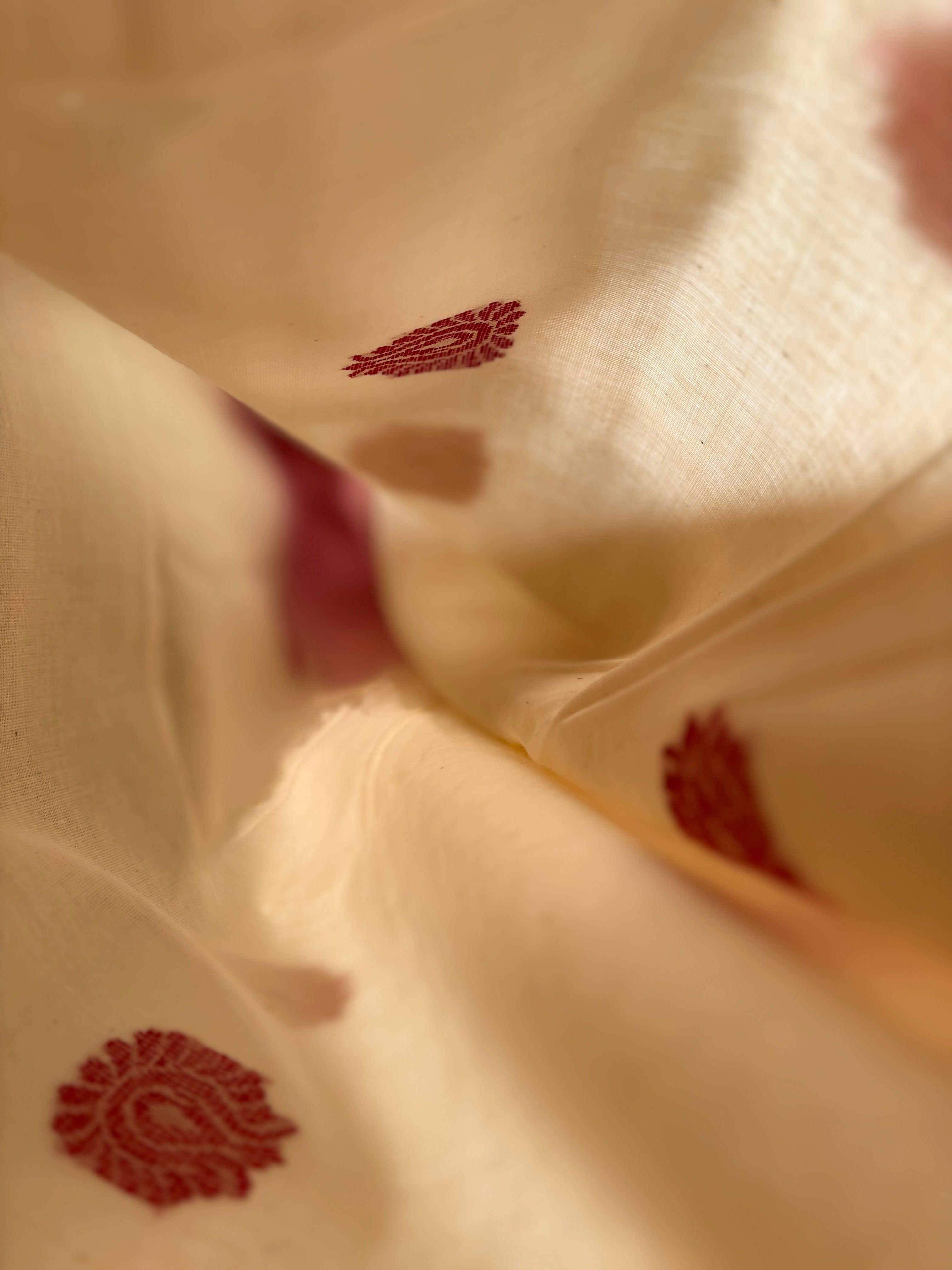
A large number of consumers think that a perfectly smooth weave equals high-quality weaving. In reality, subtle irregularities often indicate authenticity in handloom fabrics.
Here’s what to observe carefully:
1. Slight Irregularities in the Weave (A Positive Sign)
Handwoven sarees may show tiny variations in texture. Threads might appear slightly thicker in some places. These minor inconsistencies are beautiful proof of manual weaving.
Machine-made sarees are usually extremely uniform.
2. Uneven Selvedge Edges
The edges (selvedge) of a handloom saree can have a few micro waves or bumps. Powerloom sarees generally have very sharp edges which are perfectly straight with machine finishing.
3. Minor Thread Variations
When you zoom in or examine closely, authentic handloom pieces often show:
- Subtle differences in thread tension
- Slight texture variations
- An organic rhythm in weaving
These are natural characteristics, especially in pure handloom cotton sarees, and should not be mistaken for defects.
4. Hand-Tied Tassels
In genuine handloom sarees:
- Tassels are usually tied by hand.
- They may not be identical in size or spacing.
Factory-produced sarees generally feature uniform, machine-cut tassels.
5. Time Taken to Produce the Saree
5. Time Taken to Produce the Saree
Handloom weaving is slow and meticulous.
- Simple cotton sarees can take several days.
- Detailed designs may take weeks.
- Complex motifs demand immense patience and skill.
If a highly detailed saree is available in bulk at a very low cost, it’s worth questioning its genuineness.
Why Prices Vary So Much
It’s common for first-time buyers to compare prices and feel uncertain. Authentic handloom may appear more expensive — but here’s why:
- Artisan labor and fair wages
- Time-intensive weaving
- Natural fibers and dyes
- Small-batch productio
By picking up handloom, you are selecting heritage and sustainability instead of mass production.
At Sutra Art of Clothing, our carefully curated collection Indian ethnic wear emphasizes on quality rather than quantity, with every piece holding true significance.
Pre-Purchase Checklist: What to Check Before you Purchase
This is a basic checklist which you can use to make informed decisions before buying the first handloom saree.
Request a Close-Up Fabric Video
Ask for:
- A detailed close-up of the weave
- Movement shots to show texture and drape
- Natural lighting visuals
Videos reveal texture details that photos may hide.
Check the Reverse Side Image
Authentic handloom sarees often show weaving details and thread floats on the reverse side. Machine-made sarees typically look identical on both sides.
Always request a clear backside image.
Look for Weaving Process Photos
Transparent sellers often share:
- Artisan-at-work photographs
- Loom setup images
- Details about the weaving region
This builds credibility and trust.
Ask About the Artisan Cluster
Do not hesitate to inquire:
- Where does the saree originated from?
- Which artisan community wove it?
- What is the time taken to produce one piece?
Brands deeply connected to artisan clusters are proud to share these details.
Verify Fabric Weight and Care Instructions
An authentic handloom saree has a unique touch and mass. Ask for:
- Exact fabric composition
- Approximate weight
- Proper wash care guidelines
Clear answers indicate authenticity and product knowledge.
Selecting the Correct Fabric as a Beginner
If this is your first purchase, consider starting with simpler weaves.
Handloom Cotton
- Lightweight and breathable
- Comfortable for long wear
- Perfect for Indian weather
Cotton handlooms are ideal entry points into the world of handwoven textiles.
Handloom Silk
- Rich and structured drape
- Suitable for festive occasions
- Requires more weaving time and expertise
Silk handlooms reflect intricate artistry and tradition.
The Emotional Value of Your First Handloom Saree
Buying your first handloom saree is not just about fashion. It represents:
- A conscious move away from fast fashion
- Support for artisan livelihoods
- Appreciation of Indian textile heritage
- A timeless addition to your wardrobe
When you own real vintage traditional handloom sarees you will be holding on to generations of weaving skills and culture.
Conclusion
Purchasing your first handloom saree online doesn't need to be an intimidating experience when you know what makes an item really authentic and what you should look into prior to purchasing. When learning how to recognize quality problems in weaving, requesting clarification, confirming information about the artisan, and selecting the reputable sources such as Sutra Art of Clothing, you turn your purchasing process into an important investment on heritage, sustainability and classic style.
FAQ
1. How can I identify an authentic handloom saree in online purchase?
To determine an original handloom saree on the internet, look at the slight anomalies in the weave, improper selvedge edges and slight differences in the threads. Authentic handloom sarees are hand weaved, hence they might not look perfectly smooth as machine produced fabrics. Request to send close-up photos and videos of the backside in order to verify authenticity.
2. Why are handloom sarees more expensive than machine-made sarees?
Handloom saree artisans spend days or even weeks to make a single saree. The high price is because of the workmanship, time-consuming weaving, use of natural fibre and production at a smaller scale which is more prized as compared to powerloom sarees that are produced commercially.
3. What should I check before buying a handloom saree online?
Before making an online order of a handloom saree, demand the fabrics close-up pictures and videos, view the reverse side of the saree, query where the saree is woven, artisan cluster and also the composition, weight and instructions to handle the fabric. This knowledge can be utilized to ensure that you are buying a real hand-weaved product.
4. Which kind of handloom saree is best for beginners?
First-time shoppers would prefer handloom cotton sarees, as they are lightweight, breathable and comfortable on a daily basis. The handloom silk sarees are also in demand although they are normally more elaborate and perfect for celebrations or special occasions.