
Why Jamdani Dress Material Holds a Special Place in Handloom Fashion
Handloom fashion in India is more than a trend - it is a living story of culture, heritage and timeless magnificence. Among the other types of textiles that have helped tell this story, Jamdani is unique for its delicate beauty and historical depth. Known for its airy texture, exquisite woven designs and rich cultural arts, Jamdani has beautifully transcended through the royal patronage to the contemporary wardrobes. Today the designers and the conscious consumers alike are rediscovering the beauty of Jamdani dress material as it continues to have a special place in handloom fashion when styled with thought by contemporary brands such as Sutra Art of Clothing.
The Rich Origins of Jamdani in Indian Handloom Culture
The origin of Jamdani is deep rooted in the Bengal region and flourished in the Mughal realm. Traditionally, this was worn by the nobles, and was highly appreciated due to its sheer flatness and elaborate designs that seemed to float on its surface. Weaving was profoundly connected to the local population, the cycles of the seasons, and traditional wisdom, making Jamdani a part of the Indian textile condition.
Unlike mass produced fabrics, Jamdani has evolved itself as a slow, thoughtful art form. Each motif had symbolic meaning - florals symbolizes prosperity, geometric forms represent balance or nature-inspired which was celebrating life itself. This cultural depth is one of the major reasons why Jamdani continues its own resonance in handloom fashion even today.
What Makes Jamdani Dress Material Truly Unique
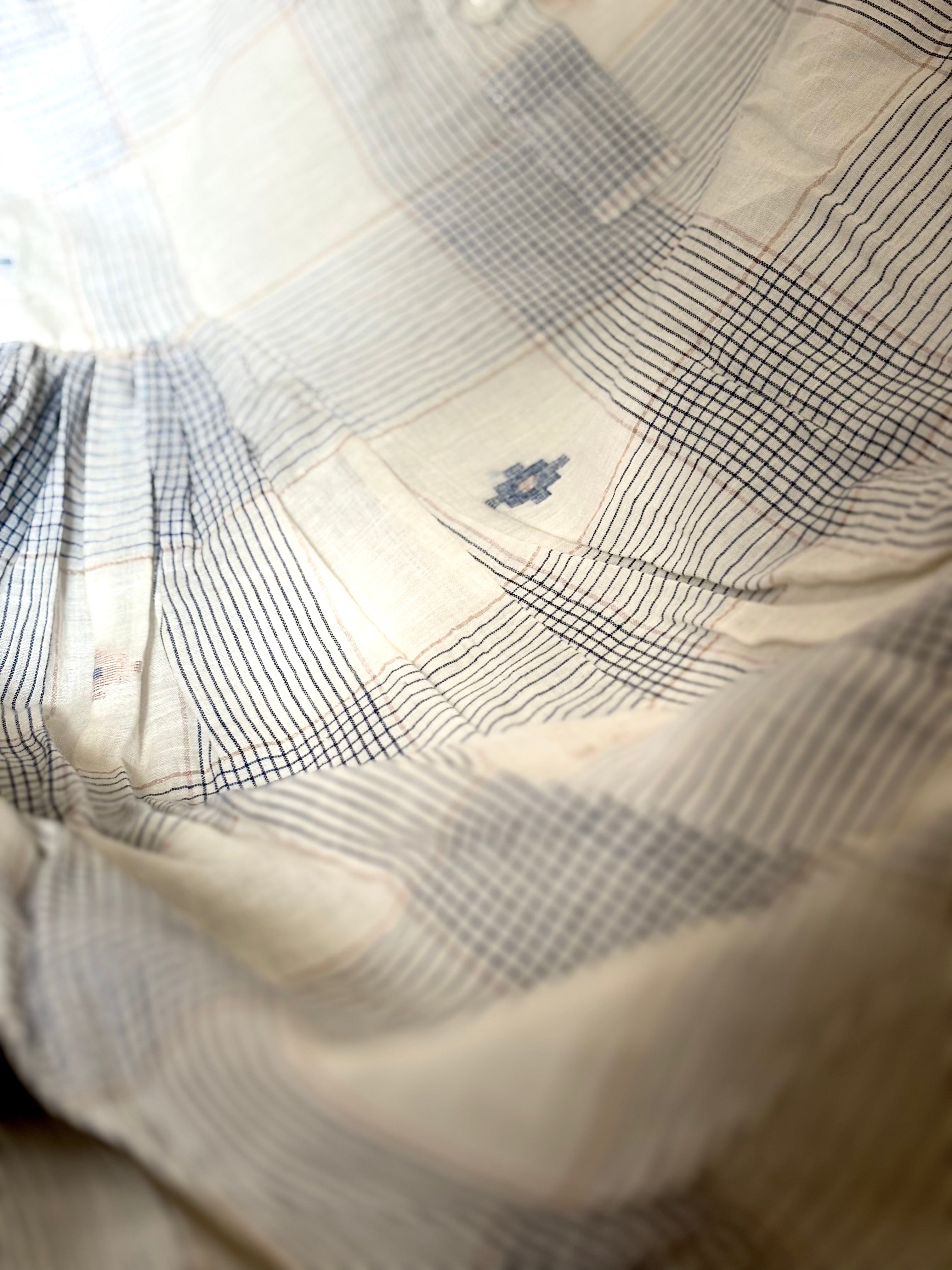
The characteristic that differentiates jamdani dress material is its heavenly quality. The characteristics that render the garment applicable for daily activities and parties or events is its low weight, breathable feel and attractive appearance. The designs are woven manually instead of screen-printed on the cloth, thereby giving Jamdani its distinctive feel and look.
Another defining feature is versatility. Jamdani can also be made in the form of kurtis, anarkalis, tunics and fusion outfits in contemporary style but without sacrificing traditional style at all. At Sutra Art of Clothing, this flexibility is celebrated by incorporating designs that merge the beauty of the past with new cuts that help wearers to live into the tradition without compromising the fashion.
The Growing Popularity of Jamdani in Modern Fashion
Over these past years we have witnessed a definitive shift towards mindful fashion. Customers are already looking for fabrics that are genuine, durable and narrate a story. Jamdani is a perfect fit in this movement. To make it more appealing to a younger audience, designers are matching them with minimalist shapes, light decorations, and contemporary color selections.
It has also been revived through social media and digital platforms. The jamdani dress material is a heritage cloth that can now be viewed by online shoppers without going to the region, hence it is no longer limited to a regional setting. This online presence has enabled Jamdani to shift the paradigm of handloom fairs into mass fashion discourse.
Jamdani and the Comfort of Natural Fabrics
Comfort has been a major consideration of dressing, particularly in hot and humid weather. The use of natural fibers makes Jamdani incredibly comfortable to wear throughout the day. Most Jamdani garments are woven with cotton dress material which gives them breathability, softness while maintaining the structure.
Jamdani is a type of cotton that is widely used as everyday attire, office wear and at informal events. It is easy to wear, cool, and has a very soft touch to the body - the same traits appreciated by contemporary consumers along with beauty. Sutra Art of Clothing frequently emphasizes such attributes by providing designs that are comfortable and yet subtle in their elegance.
Exploring Jamdani in Silk for Occasion Wear
Although cotton Jamdani is best suited for daily grace, silk Jamdani brings an excitement of event and grandeur. Silk dress material is used to provide a slight bit of luster and richness which makes it appropriate for wearing at festivals, weddings and cultural celebrations. Silk Jamdani preserves the lightness of traditional Jamdani while increasing its visual appeal.
Designers experiment on jamdani silk via jewel colors, pastels, and muted metals. They can be styled easily with simple jewellery and modern dresses, producing a sophisticated and classy appearance instead of those that are characterized by the conspicuous adornment. Jamdani silk is a perfect product to people who value modest luxury.
The Part of Jamdani in Sustainable Fashion
Sustainability is no longer optional but essential. Jamdani also inherently complies with the principles of sustainable fashion as the process of production has low impact and utilizes natural fibers. Selecting Jamdani helps to uphold the traditional weaving community while advancing the slower, more responsible fashion process.
Brands such as Sutra Art of Clothing are playing an important role here by reintroducing Jamdani into a modern collection without undermining its origins. Through specially designed Jamdani productions, these brands contribute to the preservation of relevancy and appreciation of the legacy textile in contemporary wardrobes.
Styling Jamdani Dress Material for Today’s Wardrobe
Another major strength of Jamdani is its flexibility in styling. It is capable of being dressed up or down in accordance with the occasion. To have a casual look, a simple Jamdani kurta along with straight pants or palazzos will be a great combination. Layered silhouette, dupattas or structured tailoring might be considered appropriate in case of a formal setting.
The choice of color is also important. Sheer whites and pastels bring out the fragrance of Jamdani, whereas shades of deeper color makes a bold statement in the contemporary fashion. Sutra Art of Clothing frequently explores both sides of the spectrum, providing choices that would suit varying personal styles.
Why Jamdani Continues to Inspire Designers
The reason why Jamdani attracts designers is that it provides limitless creative form without diminishing its identity. The cloth is nothing but a screen onto which custom and creativity are projected. Jamdani can easily transform with changing fashion sensibilities, starting from small collections to big bold pattern placements.
Its classic value makes Jamdani never feel old-fashioned. Rather, it recreates itself with every generation, which makes it an evergreen inspiration in handloom fashion. It is this timelessness that continues to make Jamdani the center of design season after season.
Conclusion
Jamdani dress material is something special to handloom fashion as it is a wonderful way to connect the past and the present together. It is a fabric that defines trends through its cultural richness, ease, flexibility, and inherent style. As innovative brands such as Sutra Art of Clothing continue to rebrand Jamdani to suit the modern world, this tradition-based textile has a second life in the modern wardrobe, stating that style never goes out of date when anchored with tradition.


