

When the Loom Meets the Algorithm: Reshaping Handloom in the Age of AI
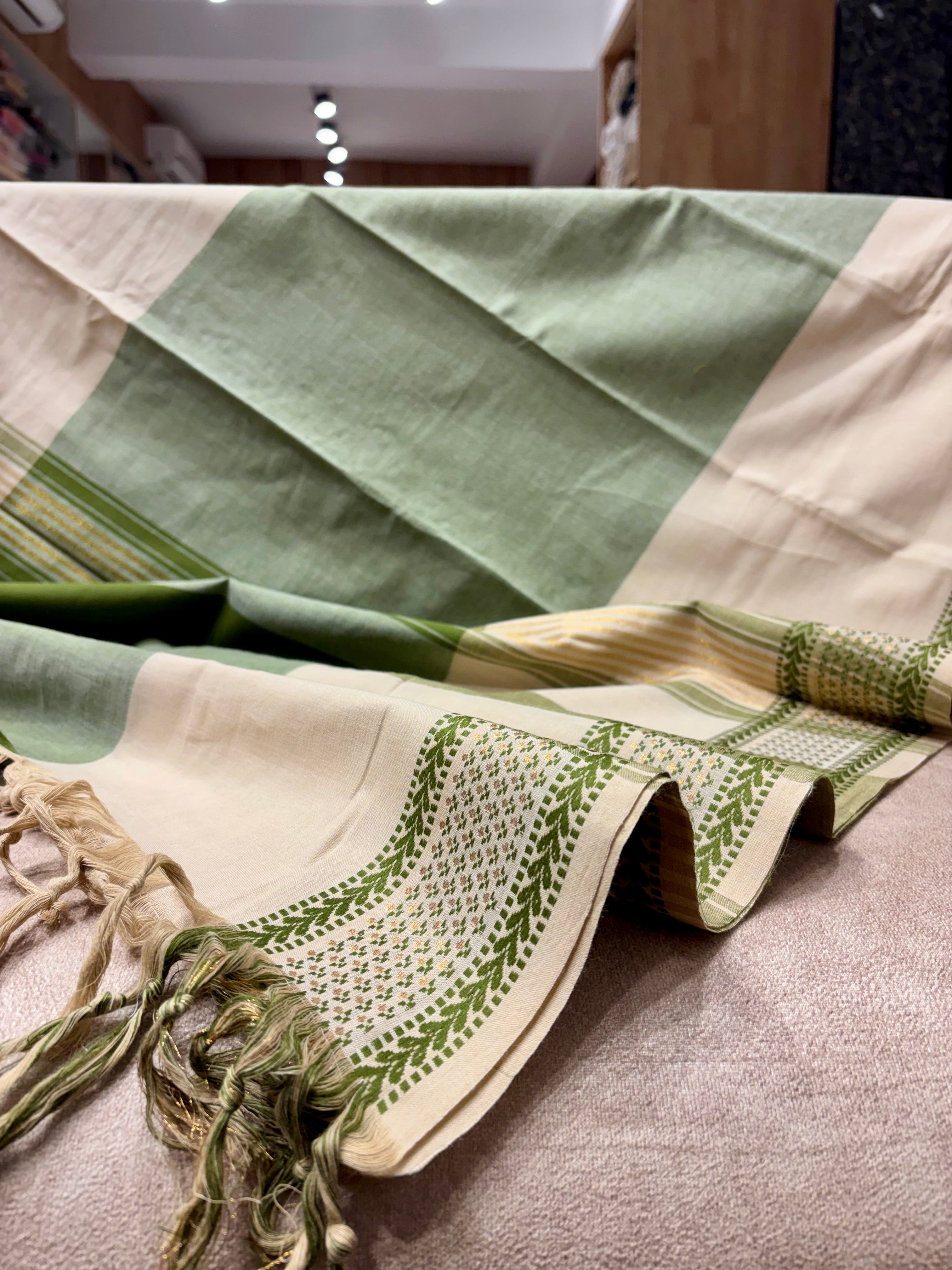
Handloom is not just a fabric, it is a memory developed in wearable form. However, today this vital tradition is at the crossroads. On one side: the loom, based on heritage and the touch of humans. On the other: the algorithm, fast, data-driven, and shaping how the world discovers, buys, and values fashion.
The question isn’t whether AI will enter the handloom ecosystem—it already has. The real question is how it will be used. Will it become a force that flattens tradition into mass-market templates? Or can it be turned into a support tool that can safeguard the artist, increase livelihoods and make handloom more sustainable and visible?
At Sutra Art of Clothing, we believe the answer lies in balance. AI should not replace the weaver. It should support the weaver—by amplifying knowledge, enabling fair access to markets, reducing waste, and building transparency that honors the human story behind every thread.
The Problem: What Handloom Is Quietly Losing
Handloom has survived centuries, but the pressures it faces today are uniquely modern. Many weaving communities are not just battling competition—they’re battling invisibility.
1) Fading generational knowledge
In many areas, the knowledge of weaving is transmitted through observation, repetition and oral teaching. These techniques are rarely documented formally. When younger generations move away in search of stable income, the knowledge doesn’t just pause—it disappears.
2) Inconsistent income
Weavers often work without predictable demand, fixed pricing standards, or stable long-term orders. Seasonal buying patterns and middlemen-driven pricing can make earnings uncertain even when skill levels are exceptional.
3) Limited market access
While handloom is being hailed by the global audience; many artisans are still disconnected from the direct consumers. Digital platforms exist but utilization requires marketing talent, a comfort with language and logistical systems - all of which might not necessarily be available.
4) Sustainability pressures
Handloom has inherently low-impact when it comes to industrial production, but still faces sustainability issues: unsold stock, overproduction from poor forecasting, inefficient supply chains, and lack of data-driven supply planning.
These problems don't represent a lack of talent. They reflect a lack of infrastructure—systems that support heritage work in a modern economy.
The AI Solution: Not a Replacement, But a Support System
AI can’t weave. But it has the capacity to do what machines can best do, like work with scale, data, organization, prediction, and repetitive work - so humans can focus on what only humans can do.
If used ethically, AI can become a defense cover for handloom rather than a direct competitor.
Design Support: AI as a Research Assistant for Heritage
Tradition and innovation collaborate at design. But innovation doesn’t have to mean abandoning heritage. In fact, AI can help designers and weavers return to heritage with deeper understanding.
How AI can help
-
Motif mapping: AI tools can be used to analyse historical archives of textile and identify recurring motifs, borders, symbols and layout styles across different regions of the world.
- Trend translation: Instead of changing handlooms according to the modern fashion trends, we can ask AI to translate modern silhouettes into handloom-friendly forms, respecting fabric's behavior and draping.
This makes AI a researching assistant rather than a creator. The weaver remains the artist. Cultural intuition remains human. AI simply helps surface forgotten references and connect design dots faster.
Preserving Techniques: Digital Archiving of Oral Histories and Weaving Setups
Some of the most valuable handloom knowledge is not written anywhere. It lives in spoken instruction, muscle memory, and regional practice.
This is where AI-enabled documentation becomes powerful—not for commercial gain, but for cultural preservation.
What digital preservation can look like
-
Oral histories recorded and transcribed: AI translation technology has the capability to make written records from oral histories, including stories, instructions, songs, and weaving philosophies in local languages.
- Regional technique libraries: A structured digital archive can preserve variations—so the world doesn’t reduce handloom into one generic category.
This is crucial because preservation isn’t only about keeping a technique alive. It’s about keeping its context alive: why a motif exists, what it symbolizes, and how it differs from village to village.
Efficiency: Smarter Forecasting to Reduce Waste and Unsold Stock
One of the hidden challenges in handloom is not production—it’s planning.
When demand is unpredictable, artisans may produce items that don’t sell quickly. This leads to:
- cash flow problems,
- stock accumulation,
- discounting pressure,
- and emotional fatigue.
AI can reduce this stress by making forecasting more intelligent and less guesswork-driven.
How forecasting can help handloom
- Predict which colors and product categories will perform best by season.
- Help brands place orders based on real demand signals—not assumptions.
- Reduce overproduction while increasing consistency in artisan income.
The sustainability benefit is immediate: less wasted fabric, less dead inventory, fewer rushed decisions, and more thoughtful production cycles.
Transparency: AI-Driven Traceability to Highlight the “Invisible Labor”
In many cases, the consumer sees the product but not the process. The time, precision, and labor behind handloom often remain unseen.
This invisibility affects pricing. People underestimate the work when they fail to comprehend it. AI-powered traceability can change that by making the journey of a textile transparent and authentic.
What traceability can include
- Who wove the fabric and where.
- What yarn was used and its source.
- Which technique was used.
- What makes this textile unique to a region?
When traceability is strong, the story becomes undeniable. It also helps fight imitation and false “handloom” labeling—protecting both the artisan and the buyer.
Most importantly, transparency honors the “invisible labor”—not as marketing, but as recognition.
Empowerment: Tools for Fair Pricing, Logistics and Direct Communication
Empowerment is not a slogan. It’s a system. When applied correctly, AI may lower the reliance on the middlemen and establish direct channels between craftsmen and business.
1) Fair pricing tools
AI can support pricing by factoring in:
- hours of labor,
- material cost,
- complexity level,
- rarity of technique,
- and market benchmarks.
This doesn’t mean the price becomes “automated.” It means the artisan gains pricing clarity and negotiating power.
2) Direct communication
Language and digital comfort can be barriers. AI translation and assisted messaging can enable weavers to:
- speak directly with customers,
- understand feedback,
- and share their process in their own words.
That’s not just convenience—it’s dignity.
The Sacred Boundary: What AI Must Never Replace
This is the heart of the conversation. AI can assist. AI can organize. AI can predict. AI can translate.
But AI must never replace:
- the human hand,
- cultural intuition,
- regional irregularity,
- and the soulful “imperfection” that makes handlooms real.
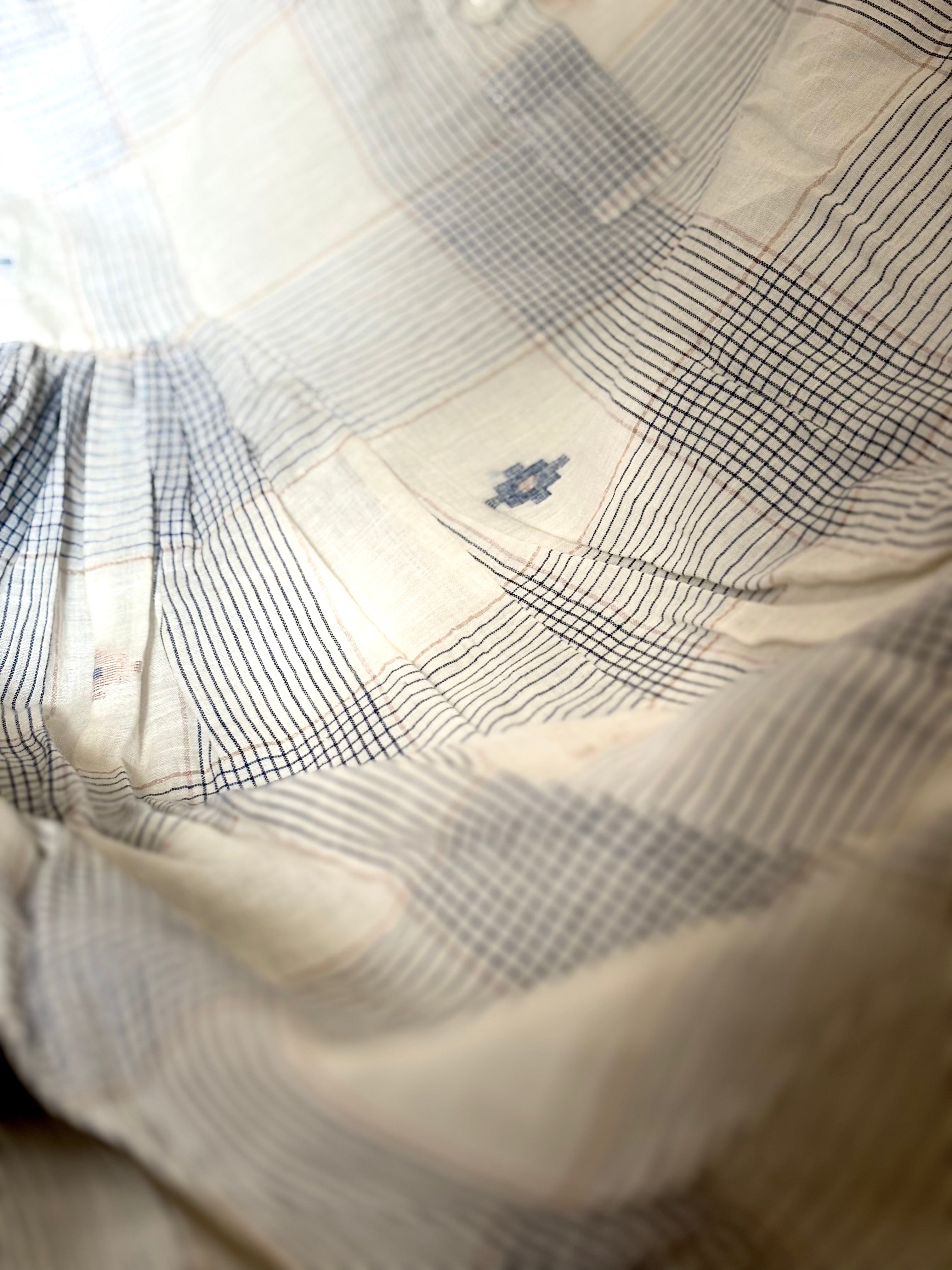
Handlooms are not meant to be perfectly uniform. The beauty lies in subtle variations:
- a slightly different edge,
- a motif that shifts with the weaver’s rhythm,
- a texture that feels alive,
- a finish that carries personality.
If AI is used to standardize handloom into factory-like sameness, we lose the very thing we are trying to protect.
At Sutra Art of Clothing, we see AI as a supportive layer—not the center. The loom remains sacred. The maker remains essential. The textile remains human.
Conclusion: The Future of Handloom—Hope, Not Hype
The future of handloom doesn’t depend on rejecting technology. It is dependent on refusing to let technology obliterate humanity.
But the guiding principle must remain clear - AI should serve the artist and certainly not be used to substitute the artist. When the loom catches up with the algorithm, the loom still has the advantage.
And, if we use AI in a humble and responsible way, we can create a future where handloom isn't a fading tradition - it's a flourishing one. Not behind glass protection, but worn with pride, fairly valued and to be carried on by both memory and innovation.