
A Fabric Is a Climate Solution: How Indian Handlooms Were Designed for Survival First and Style Second
There’s a reason denim became a global legend. It wasn’t born on a runway. It didn’t begin as a “trend.” It started as a solution—built for miners, workers, and people who needed their clothing to endure. Denim became iconic because it was engineered before it was admired.
Now here’s the truth most people miss: India has been doing this for centuries—quietly, brilliantly, and far more intelligently than modern fashion gives credit for.
Before air conditioners, before polyester, before fast fashion decided clothing should be disposable, Indian textiles were designed with one goal at the center: survival. They were not just “beautiful fabrics.” They were climate technologies—tools for heat, humidity, movement, sweat, and long days under an unforgiving sun.
At Sutra Art Of Clothing, we believe that handloom isn’t nostalgia. It’s research. It’s functional design. It’s climate logic woven into everyday life.
How India’s Climate Designed Its Wardrobe
India isn’t one climate. It’s a continent of climates.
Dry deserts. Coastal humidity. Monsoon-heavy regions. High altitudes. Scorching summers. Sudden rains. Salt air. Dust storms. Sticky heat that clings to the skin like a second layer.
So the Indian wardrobe couldn’t be one thing either.
Instead, it became a system—each region developing textiles that solved local environmental problems:
- Fabrics that breathe without becoming transparent
- Weaves that allow airflow while holding structure
- Dyes that cool the body and resist bacteria
- Patterns that hide dust, stains, and wear
- Strong yarn systems that survive movement and repeated washing
This is not romantic folklore. It is functional design at scale—developed by communities who didn’t have the luxury of dressing “for aesthetics.” Clothing had to be performed.
South Cotton: Thermal Engineering in Everyday Wear
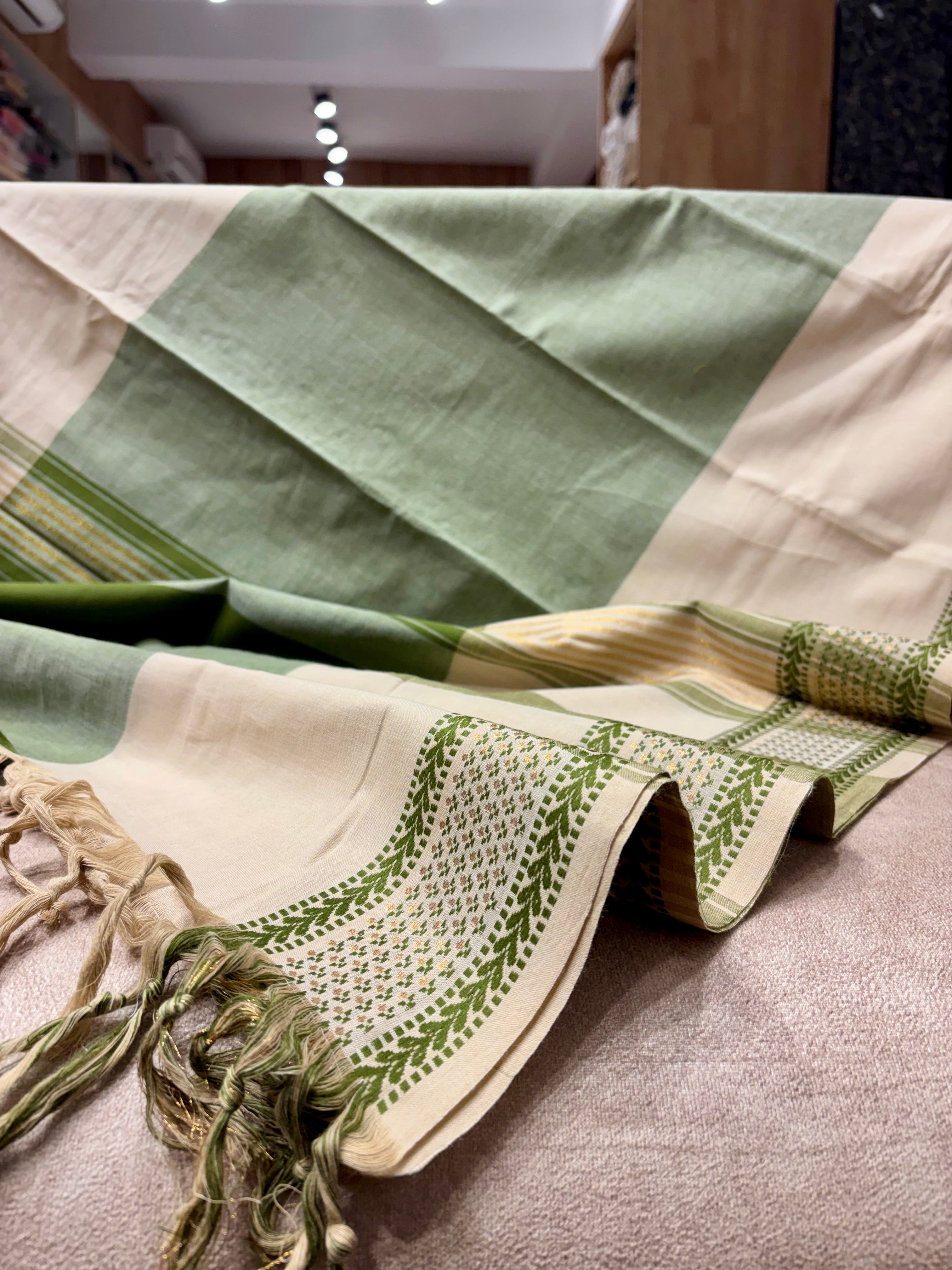
South India's relationship with cotton is not accidental - it is inevitable. In humid heat, synthetic fabrics occlude sweat. Dense weaves feel suffocating. The body gets overheated, skin becomes irritated, and it becomes impossible to feel comfortable. So South India developed the textile that does what modern sportswear says it can do; regulate the temperature naturally.
Why South cotton works
South cotton textiles - especially the ones which are woven for lungis, veshtis and summer sarees - often use:
- Long-staple cotton fibers which have a smoother and cooler feel
- Breathable weave spacing to allow airflow
- High absorbency to manage sweat without sticking to the body
- Lightweight drape that avoids insulation
The fabric doesn’t fight the climate. It cooperates with it. This is thermal engineering disguised as tradition. A South cotton weave can cool you down not because it’s thin, but because it’s designed to exchange heat efficiently—like ventilation for your skin.
The genius detail
Many of these textiles are woven with adequate openness to breathe but with an adequate structure to hold form. That balance is difficult to replicate industrially because mills optimize for speed and uniformity—not climate comfort.
South cotton proves that in India, “summer fabric” wasn’t a category. It was a necessity.
Jamdani: Lightness With Structure (A Fabric That Floats, But Holds)
At first glance, Jamdani looks delicate—almost weightless. But that’s the illusion. Jamdani isn’t fragile. It is intelligently constructed.
Born in Bengal’s humid environment, Jamdani had to solve a major problem: how do you create a fabric that breathes like air but still holds shape and elegance?
What makes Jamdani climate-smart
Jamdani is woven with:
- Ultra fine yarns to reduce bulk and heat retention
- Air permeable structure facilitating constant ventilation
- Motifs woven into the fabric (not printed) which maintain softness and flexibility
- Balanced density not too open to lose modesty, not too dense to trap heat
The result is fabric that behaves like a second skin. It doesn’t cling. It doesn’t suffocate. It moves with you.
The real engineering
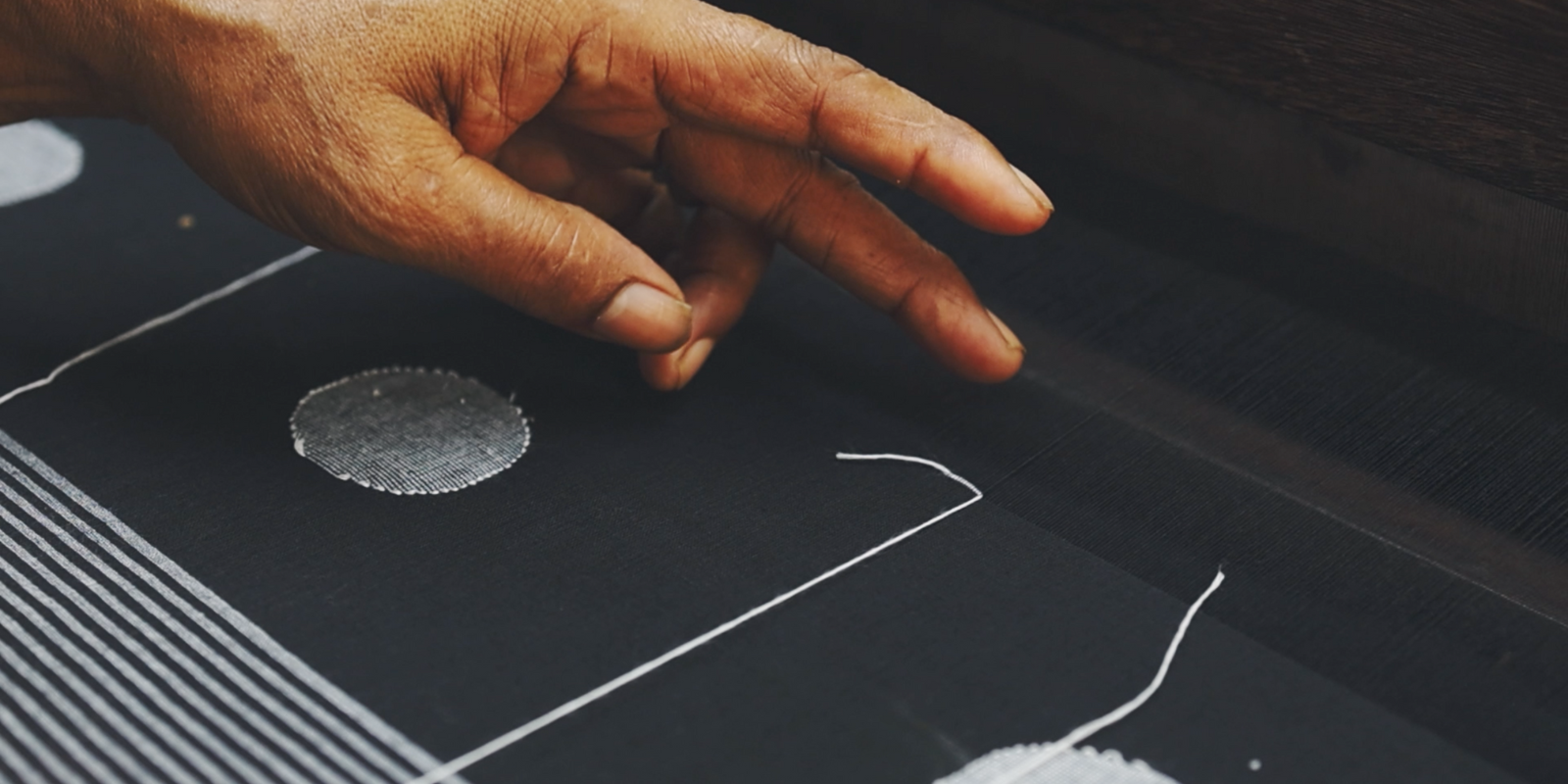
Jamdani’s motifs aren’t added later. They are inserted while weaving, which means the fabric’s beauty is also its structure. Like the beams in a building, the design is part of the fabric’s integrity.
In a humid climate, where heavy embroidery becomes unbearable, Jamdani offers decoration without weight. It is elegant without insulation. That’s not just art. That’s design discipline.
Ikat: Strength, Movement, and a Textile Built for Motion
The pattern is formed through resist-dyeing of the yarn prior to weaving, in other words, the pattern is designed at the thread level. That's important because the fabric doesn't just look dynamic - it is structurally built for movement and endurance.
Ikat developed across regions with intense daily activity—work, travel, heat, and repeated use. The textile had to survive friction, sweat, and long hours.
Why Ikat performs
Ikat textiles are often known for:
- Strong yarn tension that improves durability
- Interlocked patterning that distributes stress across the weave
- Slight elasticity in drape due to yarn structure
- Movement-friendly fall—fabric that flows instead of fighting the body
If Jamdani is air, Ikat is motion.
The hidden functional benefit
Ikat patterns naturally camouflage wear. The blurred edges and layered geometry hide minor stains, dust, and fading—making it perfect for real life, not showroom life.
That’s what makes it similar to denim’s origin story: both are fabrics designed for repeated use, built to look better with time, not worse.
At Sutra Art Of Clothing, this is the kind of intelligence we admire—fabric that respects the body in motion.
Ajrakh: Climate-Adaptive Dyeing (When Color Was Technology)
Developed in Kutch and Sindh, regions of harsh sun, heat, dust and high temperature variations, Ajrakh textiles needed to do more than to just be pretty looking.
They had to:
- stay comfortable in extreme weather
- resist odor and bacteria
- protect skin from sun
- handle repeated washing
- remain wearable even in dusty conditions
Ajrakh achieved this through something most modern fashion ignores: dyeing as performance engineering.
Why Ajrakh feels different
Ajrakh involves natural dyes and a very complex process that involves:
- Indigo (cooling action, anti-microbial action)
- Madder and other plant-based reds
- Multiple washes and resist steps that improve softness and stability
- Layered printing that creates dense, protective color without plastic-like coating
Unlike synthetic dyeing that often seals the fabric, Ajrakh dyeing keeps the textile breathable.
The climate function
Ajrakh’s dark indigo and deep reds aren’t random. In desert climates, clothing often needs to:
- absorb heat in the cold night
- protect from harsh sunlight in the day
- avoid showing dust easily
Ajrakh patterns do exactly that. Their geometric density hides dust and stains, while the dye and fabric remain breathable. It’s the original “performance fabric,” created without petroleum.
If denim is rugged because of twill and indigo, Ajrakh is rugged because it treats dye as a tool—not decoration.
Handloom Isn’t Outdated. It’s Understudied.
Modern fashion often frames the handloom as:
- slow
- traditional
- cultural
- artistic
- heritage
All true—but incomplete.
The real story is that handloom textiles are functional inventions, refined through centuries of real-world testing.
They are:
- climate solutions
- engineering responses
- breathable systems
- skin-friendly technologies
- sustainable by default
Fast fashion made clothes affordable. But it also made clothing forgetful - forgetful of climate, forgetful of comfort, forgetful of the body.
Handloom, on the other hand, remembers. It remembers what heat feels like. What humidity does. How sweat behaves. How movement wears fabric down. How the sun punishes skin. How monsoon air changes everything.
That’s why these textiles still work today. Not because they are old. But because they are correct.
Why This Matters Now (Especially in a Warming World)
As temperatures rise and weather becomes more extreme, the fashion industry continues to push for fabrics that trap heat and shed microplastics. It's like making houses with no ventilation, and wondering why people can't breathe in your house.
At Sutra Art Of Clothing, we view handlooms not as a museum piece, but a blueprint. The future where fashion is not only about trends - but about survival, comfort, and function.
The truth is: the most advanced fabric isn't necessarily the newest fabric.