
How Indian Fashion Designers Turned Cultural Storytelling Into Met Gala 2026 Fashion
The red carpet at the Met Gala 2026 was a far cry from the celebrity parade. It was like a show about transforming fashion into art. It was a living gallery, where couture would weave in memory, identity, and emotions with sensitive threads narrating a story in each and every fold.
Aligning with the Fashion is Art theme for this year's fashion's greatest night, there were dramatic silhouettes, architectural gowns, metallic fantasies, and cinematic tailoring, but what was really left indelible was a transformation of Indian craftsmanship to wearable art by the South Asian designers.
Indian designers were not just a part of the international luxury fashion dialogue, but the torchbearers, actively engaged in transforming various forms of embroidery, such as heirloom textiles and hand-painted couture, alongside zardozi embroidery, pichwai motifs, and Shola artistry, along with Kanjivaram weaving in their own canvas of art.
There was a completely different directional shift.
The designers were not seeking to modernize Indian artistry, so it could be noticed on the world stage. They gave room to centuries-old craftsmanship, living unashamedly in its most luxurious form without waiting for approval from the West.
And that’s exactly what made South Asian fashion feel powerful!
Karan Johar in Manish Malhotra

Image Source: Vogue
Karan Johar was a rolling canvas in a custom Manish Malhotra ensemble, fashioned by Eka Lakhani.
The ensemble featured:
- Hand-painted detailing
- Lotus motifs
- Swan embroidery
- Intricate zardozi craftsmanship
- Architectural elements
The entire piece of clothing looked like a movie.
Theatrical. Romantic. Mystical.
One of the most labour intensive outfits having taken 5600 hours of work, this impressive piece reflected the grandeur of Raja Ravi Varma’s artwork. It was a fusion of craftsmanship, mythology and contemporary couture, proving how beautifully Indian artistry aligns with modern fashion.
Karan Johar didn't dress for a theme, he was the theme.
Isha Ambani in Gaurav Gupta

Image Source: Vogue
Isha Ambani looked breathtaking in a custom Gaurav Gupta. The sari-gown was handcrafted by artisans from the Swadesh collective using pure gold threads and was styled by Anaita Shroff Adajania. It seamlessly blended futuristic couture and Indian craftsmanship in a way that was deeply emotional.
The ensemble incorporated:
- Pichwai inspired motifs
- Relief embroidery
- Aari craftsmenship
- Intricate gold weaving
- Hand-finished artisanal detailing
Though adorned with real diamonds and her mother’s precious jewels, the blouse was one of the most appealing elements. Studded with gemstones, the blouse was a couture piece with both legacy and emotions.
It wasn't just red carpet dressing, but memory preserved, dressed up as fashion.
Accessories continued the artistic storytelling. The overall design created a sense of an immersive art installation with the addition of a sculptural steel mango-shaped minaudière and handcrafted ceramic flowers. It was a visual narrative blending luxury, heritage, personal history and craftsmanship.
Isha Ambani in Manish Malhotra

Image Source: Instagram
At the Vogue dinner, Isha Ambani looked spectacular in a bespoke Manish Malhotra ensemble, styled by Anaita Shroff Adajania. Her outfit sparked conversations around contemporary Indian luxury wear on global fashion platforms.
Its sculpted lines, metallic accents, and couture-level craftsmanship made it a standout outfit. Some of the key highlights of the outfit:
- 26 artisanal textile borders from all over India
- Zari craftsmanship from Uttar Pradesh
- Gujarat’s Ashavali brocade
- Floral gara embroidery
- Maheshwari geometric motifs
- Metallic karchob work
- Tilla embroidery from Kashmir
- Baluchari and Kanjivaram handwoven detailing
The bandage dress was reportedly assembled by swadesh artisans over 450 hours of work, and each weave carried Indian history and legacy. The accessories, such as Outhouse’s jewelled parandi and her mother’s heirlooms, extended an emotional touch to the storytelling.
The look was a seamless fusion of Indian artistry with modern luxury aesthetics. The ensemble was strikingly compelling and redefined Indian dressing without leaning into nostalgia.
Pacho in Prabal Gurung

Image Source: Vogue
Spotted in a custom Prabal Gurung, Pacho aced the look at the Met Gala 2026.
Made in collaboration with artisans of Jaipur, the deep velvet appearance showcased Indian embroidery traditions through:
- Zardozi embroidery
- Dabka detailing
- Resham work
- Intricate aari craftsmanship
This regal ensemble reportedly took over 600 hours to be red carpet ready. With the embroidery as the centrepiece of storytelling, the outfit was particularly striking.
The result was a refined interpretation of the Met Gala’s Fashion Is Art theme and was a testament that luxury is not about logos, it is about patience, artistry and human craftsmanship.
Gauravi Kumari in Prabal Gurung

Image Source: Vogue
One of the most emotional fashion moments of the evening was done by Princess Gauravi Kumari as her gown featured an original chiffon sari that belonged to one of the most iconic royal figures, Maharani Gayatri Devi.
Prabal Gurung skillfully reimagined a modern look for the Met Gala 2026.
The combination of the ensemble was perfect:
- Heirloom fashion
- Royal heritage
- Couture craftsmanship
- Emotional narrative
- Modern tailoring
The delicacy of the chiffon saree was carefully elevated into a modern silhouette while still whispering grace and history. In an evening filled with theatrical couture, Gauravi Kumari’s look was timeless, unforgettable and felt personal.
Manish Malhotra

Image Source: Vogue
One of the most significant fashion moments of the evening was Manish Malhotra’s own appearance at the Met Gala.
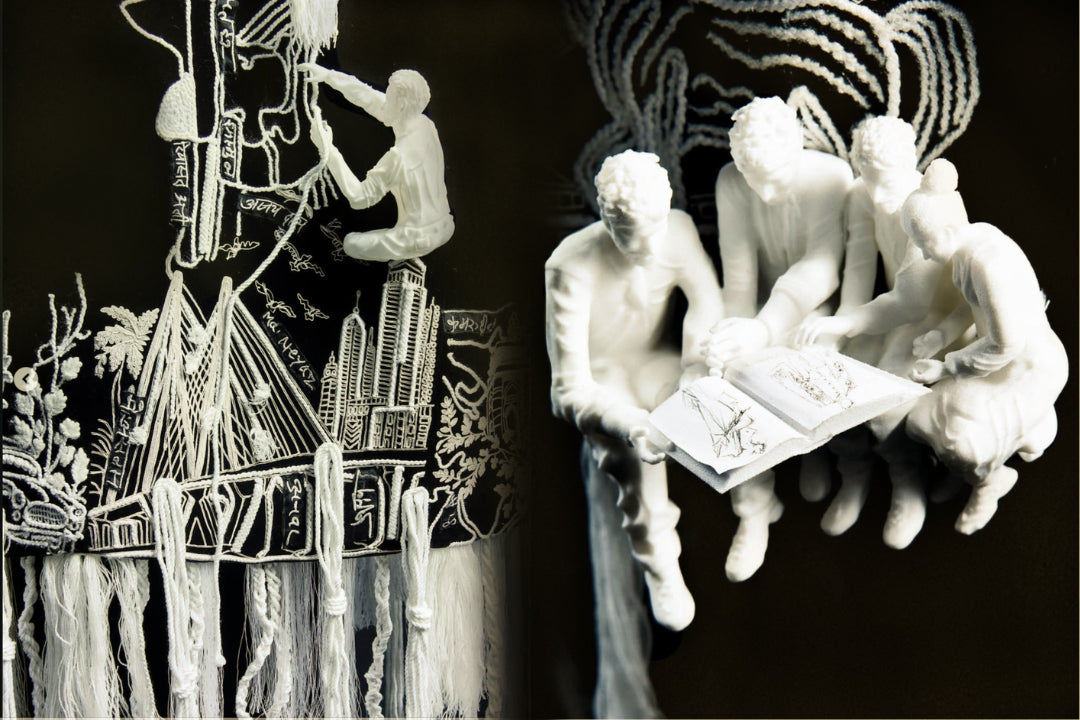
The designer's black bandhgala was layered with a striking embroidered cape, showcasing the artistic prowess of Indian couture.
The cape featured:
- Mumbai landmarks
- Chikankari embroidery
- Intricate zardozi work
- Dori craftsmanship
- Handcrafted artisanal detailing
- Embellishing the cape with signatures and names of the artisans
Manish Malhotra brought the spotlight back to the makers by embroidering their names on the cape as a tribute to the hands behind the Indian fashion labels, which aligned perfectly with the Met Gala's theme of Fashion Is Art.
Intention made the look bold and powerful!
Sudha Reddy in Manish Malhotra

Image Source: Vogue
Manish Malhotra created a couture piece deriving inspiration from the Tree of Life theme in the traditional art of Kalamkari from Andhra Pradesh and Telangana, for Sudha Reddy.
The ensemble turned regional Indian textile craftsmanship into a couture style of storytelling through:
- Intricate embroidery
- Hand painted Kalamkari motifs
- Heritage craftsmanship
- Rich artisanal surface work
The ensemble, inspired by the ancient art form of storytelling in India, perfectly captured the traditional Kalamkari style and elegance, adapting it to a contemporary luxury look that resonated with the Fashion Is Art theme of the Met Gala.
The standout element of the look was the seamless fusion of traditional Indian style with modern fashion. The ensemble preserved the soul of Kalamkari while keeping it in its original form.
Authenticity is what made the look compelling!
Diya Mehta Jatia in Mayyur Girotra

Image Source: Vogue
Diya Mehta Jatia was in one of the most artistically detailed looks of the evening from a custom creation from Mayyur Girotra.
The pieces were inspired by Bengal's traditional Shola craft, which helped in converting traditional artisanal techniques into sculptural couture. Known for its ivory like finish, Mayyur Girotra reimagined this ceremonial Bengali Shola art and turned it into an attire apt for the Met Gala carpet.
The sculptural form of the bodice highlighted in baroque and architectural elements, and yet retained the softness and complexity of handcrafted Indian artistry.
The ensemble was an elegant blend of:
- Gold-woven Kanjivaram silk
- Silver-woven Kanjivaram textile
- Traditional Bengal Shola handicraft
- Sculptural couture construction
- Artisanal detailing
The look felt like wearable sculpture rather than resembling the standard red carpet attire. That's what made it one of the interesting renditions of the Fashion Is Art theme of the Met Gala.
Why Indian Designers Dominated the Met Gala 2026 Theme?
South Asian attendees stood out at the 2026 Met Gala, and what resonated was the blend of artistry and cultural storytelling.
Their looks referenced:
- Raja Ravi Varma paintings
- Pichwai art
- Kalamkari traditions
- Shola craftsmanship
- Heirloom textiles
- Zardozi embroidery
- Kanjivaram weaving
- Artisanal handwork
The global designers emphasized on the spectacle, whereas Indian designers infused the carpet with emotional depth, craftsmanship, and cultural memory.
And that’s precisely the reason why their looks felt so magnetic this year.
Conclusion
The 2026 Met Gala quietly proved something that the fashion insiders have always known that Indian fashion no longer seeks the world’s validation but is defining the luxury fashion future.
Whether it was handcrafted embroidery, heirloom textiles, sculptural couture, or regional art traditions, the Indian designers made the evening richer, more emotional, and definitely more meaningful.
But perhaps the most compelling of them all was that they didn’t reshape Indian craftsmanship to adapt to the world’s idea of luxury, which undoubtedly made global fashion pause and admire Indian craftsmanship instead.