
Why Natural Fabrics Are Better Than Synthetic Fabrics
The choice of fabric is more important than you believe. It not only affects your comfort but your skin’s response, and even the life of your clothes. Natural materials continue to be the preferred choice over synthetic fabrics for individuals who value comfort, quality and sustainability. Synthetic fabrics are cheaper and more commonly utilised due to their availability and production processes.
There is more to natural fibres than just the visual appeal, from a light breezy cotton kurta to a handloom saree or a lightweight linen dress. They breathe better, are gentler on the body and might be more eco-friendly.
You may have observed that handmade, handloom clothes are not as similar to synthetic clothes as you may imagine and here are the reasons.
Natural Fabrics vs Synthetic Fabrics: What's the Difference?
The only difference is the source of the fibres.
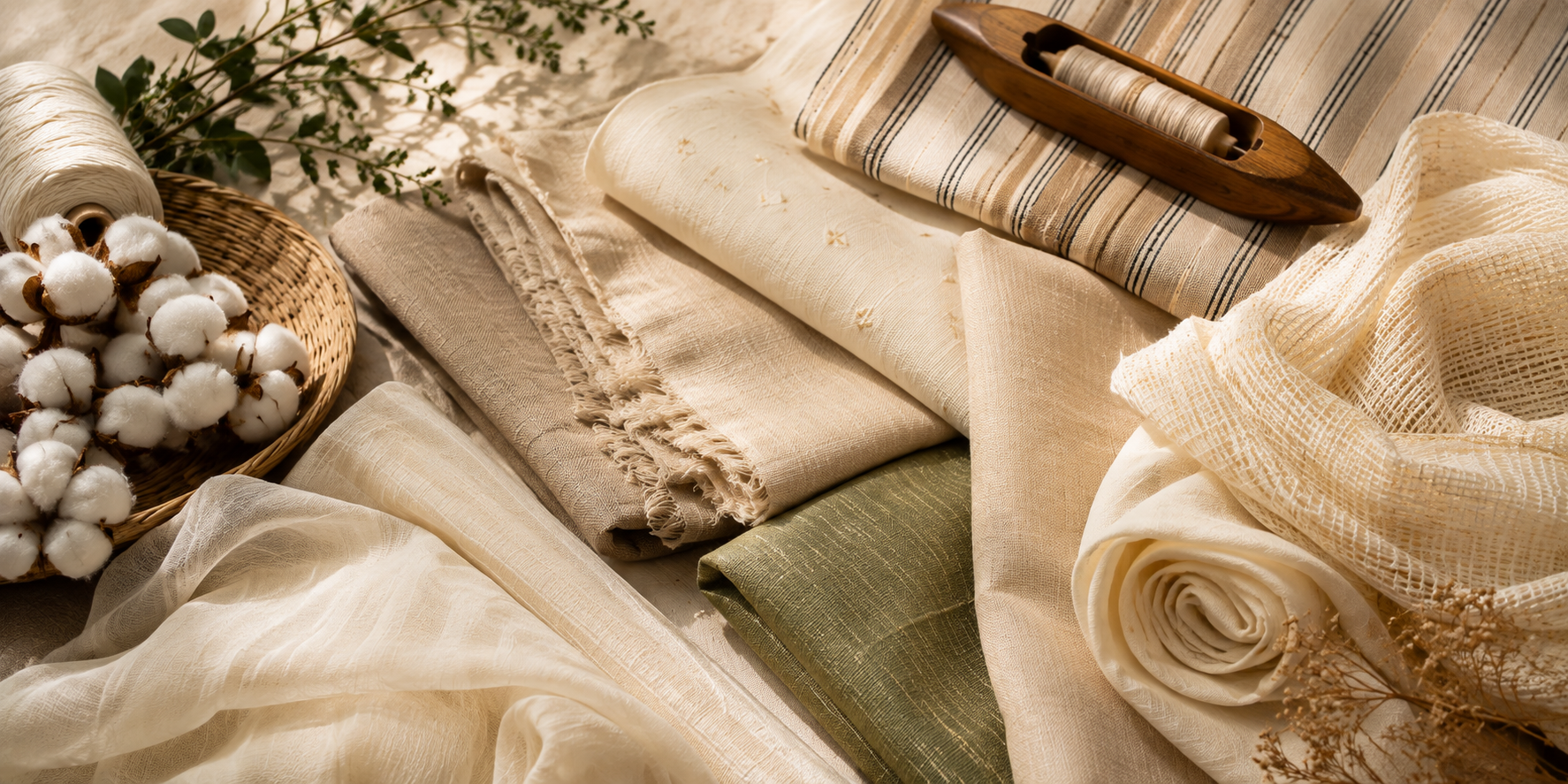
Natural fabrics are fabrics derived from fibres found in nature like cotton, linen, silk, wool and bamboo. In industry, they are very lightly processed and woven into fabric.
However, synthetics are made with chemical substances, often derived from petroleum. Some of the common synthetic fibres are polyester, nylon, acrylic and spandex.
Both are fashionable, but natural fibres often have an edge when it comes to comfort and everyday wear.
Shop The Look

Jamdani Sarees |

Pure Cotton Sarees |

Mulmul Sarees |

Cotton Silk Sarees |

Pure Silk Sarees |

Bhagalpuri Silk Sarees |
What Are Natural Fabrics?
Natural fabrics are textiles made from plant or animal fibres. Some of the most popular examples are:
- Cotton
- Linen
- Silk
- Wool
- Bamboo
- Mulmul
- Handloom cotton
These materials are recognised for their breathability, softness and body temperature regulation. They are comfy any season, and become increasingly softer with continuous usage.
Many traditional Indian textiles created from natural fibres such as handloom sarees, Jamdani weaves, Chanderi fabrics and Mulmul garments are a marriage of artisan craftsmanship and comfort.
What Are Synthetic Fabrics?
Synthetic fabrics are industrially manufactured man-made fabrics.
Common examples include:
- Polyester
- Nylon
- Acrylic
- Rayon blends
- Spandex
Often these materials are wrinkle-resistant and quite durable. However, they don't breathe as well as cotton or linen, and they can trap heat and moisture, especially in the warmer months.
That’s one reason so many people choose natural materials in the summer or for long periods of wear.
Why Natural Fabrics Are Better Than Synthetic Fabrics
Superior Breathability
Natural fibres are breathable and keep you at a pleasant temperature all day. This can make them particularly comfortable in hot temperatures and humid circumstances.
Better Comfort
Natural textiles are smooth and easy to wear and move with in your regular life. They are comfy, and you won’t feel constrained even if you are at an event or in a business atmosphere for hours.
Excellent Moisture Absorption
Cotton and linen are superb at absorbing sweat, thus will keep you dry even in hot climes. Synthetic fibres cling to the skin and don't feel good.
Gentle on Sensitive Skin
People with sensitive skin usually prefer natural fibres since they are less likely to irritate the skin. They’re also breathable, so there’s less friction and heat.
Environmentally Friendly
Natural fibres are more environmentally friendly than those made from petroleum sources and are biodegradable. Their natural material choice also supports slow fashion.
Beautiful Ageing
Petroleum-based fibres are biodegradable and worse for the environment than natural fibres. Their usage of natural materials is also a promotion of slow fashion
Ideal for Indian Weather
Many sections of India endure hot and humid summers. Fabrics such as lightweight cottons, linens and handlooms are apt for everyday use and keep you comfy all day long.
Natural Fabrics vs Synthetic Fabrics Comparison
|
Feature |
Natural Fabrics |
Synthetic Fabrics |
|
Breathability |
✓ |
✗ |
|
Comfort |
✓ |
Moderate |
|
Sweat Absorption |
High |
Low |
|
Skin Friendly |
✓ |
Depends |
|
Eco Friendly |
✓ |
No |
|
Durability |
High with care |
High |
|
Summer Wear |
Excellent |
Average |
Conclusion
The choice of fabric isn’t just about style; it’s about comfort, quality and making apparel that fits your life. Synthetic textiles offer convenience and durability, but natural fabrics stand out for their breathability, softness, and ability to keep you comfortable throughout the day.
Natural fibres give a level of comfort that is hard to rival, whether you’re wearing handcrafted sarees, exquisite kurta sets, casual dresses or classic handloom apparel.
Beautiful clothing starts with beautiful textiles and at Sutra Art of Clothing we believe in the importance of quality fabrics. This is why our designs are a celebration of natural handloom textiles that mix artisan workmanship with daily beauty. You may wear things that are as good as they feel.
FAQs
Is cotton better than polyester?
Cotton is also a better fabric for everyday wear, particularly in hot weather. Polyester also dries faster and wrinkles less than cotton. Breathable and absorbs moisture, whereas polyester is more resistant to wrinkles and dries faster.
Are natural fabrics better for sensitive skin?
Yes. Fabrics like cotton, linen and Mulmul are generally more comfortable on sensitive skin since they allow more airflow and less heat and moisture to build up.
Which fabric is best for summer?
Some of the best handloom fabric choices for the summer are lightweight fabrics such as cotton, linen, Mulmul and others that are breathable, moisture-absorbing, and comfortable in a hot climate.
Are handloom fabrics natural?
The materials used in the majority of handloom fabrics are cotton, silk or linen, which are all natural fibres. They include breathable materials that are comfortable to wear and traditional weaving techniques.
Do natural fabrics last longer?
With proper care, high-quality natural fabrics can last for many years. They are durable and can become softer with time, making them a good investment.
Which natural fabric is easiest to maintain?
Cotton is one of the easiest-to-care-for natural fabrics. It is durable, comfortable and can be washed regularly, which makes it great for everyday wear.
Why are natural fabrics more expensive?
Natural fabrics are frequently made using superior raw materials, traditional techniques of weaving and skilled artisanship. They are comfortable, durable and eco-friendly, adding to their value.