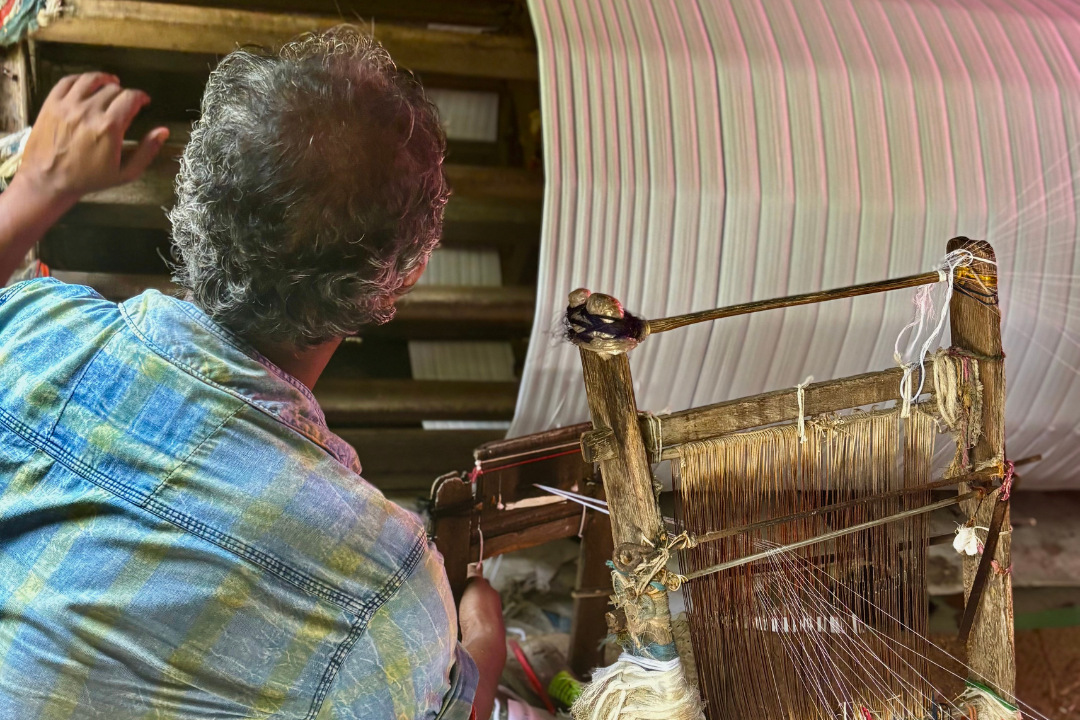
Expensive? Or Ethical? - Rethinking the Price of Handloom Fashion
The question that comes to mind and is one of the top concerns of anyone who gets into handloom fashion is Why is it so expensive?
Handcrafted clothing may appear costly when viewed up at the front, given that there are so many trends swirling through fast fashion and they are shockingly low priced. Perhaps a better question is why fast fashion is so inexpensive in comparison to handloom?
There is always a hidden cost that may be:
- Inferior quality fabrics
- Mass production
- Poor working conditions
- Wasteful manufacturing practices
- The lack of linkage with artisans of clothes making.
In handlooms, it is a matter of time and techniques that involve the human touch in each and every step of the process.
That's why the topic of ethical fashion in India is now gaining attention. People are no longer focused on looks but are considering the entire process, the impact, and how long their clothes will last. And that’s why sustainable ethnic wear is being focused on.
What Makes Handloom Fashion Expensive?
You are paying for time, labor, skill and artistry when you invest in a handloom piece. Handwoven garments take days or weeks to make, whereas machine made clothes can be mass produced in just a few hours.
Every step weaving, dyeing, embroidery, finishing and detailing requires careful attention.
This slower, deliberate process influences the pricing. But it also changes the way a garment feels when you wear it. You can feel the softness, the texture, and the uniqueness.
Everything handcrafted is unique and no two pieces are ever alike and that is why it is so appealing.
This is perhaps the most important one to keep in mind that people may overlook that every piece is made by human hands. For each handloom product, there is a master craftsman. No machine can replicate them, someone has been at a loom, carefully working each thread, someone has spent hours printing the designs, and someone has worked hours on the embroidery details.
Handcrafted clothing differs in a number of ways from mass produced clothing. Each piece is a reflection of human effort, skill passed down over generations, local craft traditions and time intensive workmanship.
| Aspect | Handloom Clothing | Machine-Made Clothing |
| Production Method | Woven and crafted by artisans using traditional techniques | Produced by automated machines |
| Time Required | Days or weeks to complete a garment | Hours to mass produce |
| Craftsmanship | Skilled manual work and generations of expertise | Minimal human involvement |
| Uniqueness | Every piece has slight variations and character | Uniform and identical pieces |
| Fabric Feel | Rich texture, softness, and individuality | Standardised texture and finish |
| Production Scale | Small-batch and limited production | Large-scale mass production |
| Durability | Made with longevity and quality in mind | Often designed for fast fashion cycles |
| Cultural Value | Preserves traditional crafts and artisan livelihoods | Focuses primarily on efficiency and volume |
| Price Factor | Includes labor, skill, time, and artistry | Lower production costs due to automation |
In many ways this is the personal touch that makes handloom items feel so personal. At Sutra Art of Clothing, we believe that handlooms should be beautiful and easy to wear. We allow the traditional techniques to merge into contemporary outfits.
The idea is to think quality over quantity, before buying handlooms which encourages us to be more thoughtful in our purchases. Most machine made clothes are produced to keep up with rapid trend cycles, and worn just a few times before being thrown aside for something newer.
Handloom garments, on the other hand, are made with longevity in mind:
- Superior fabric quality
- Stronger weaving
- Attention to finishing
- Slower production processes
This typically leads to clothes that last a lot longer, which is why more people are starting to see handloom clothing as not just a fad but a worthwhile investment.
Why Handloom Clothing Is Worth the Investment?
| What You Pay For | Long-Term Benefit |
| Superior fabric quality | Better comfort and durability |
| Stronger weaving techniques | Longer garment lifespan |
| Artisan craftsmanship | Unique, one-of-a-kind pieces |
| Careful finishing and detailing | Premium appearance and fit |
| Ethical production practices | Supports artisan communities |
| Slow fashion approach | Reduces frequent clothing replacement |
This typically leads to clothes that last a lot longer, which is why more people are starting to see handloom clothing as not just a fad but a worthwhile investment.
The Hidden Cost of Cheap Fast Fashion
The low price tag at checkout can mask significant environmental and human costs lurking behind the scenes. Excess textile waste, poor working conditions, exploitative labour practices and pollution caused by synthetic textiles are often associated with fast fashion.
Low Prices Often Mean Compromises: Fashion can’t be endlessly cheap without someone paying the price, whether it’s the artisan or the environment and most of the times the quality of fabric. It’s a combination of factors.
Consumers are beginning to understand that the lower prices often come at the expense of sustainable practices in the long run. This is one of the major reasons dialogue around ethical fashion India is growing rapidly today.
Ethical Fashion Feels Different: It is truly special wearing clothing that is made with care and infused with intention. Each piece has a story linked to craftsmanship and the process behind it. That emotional connection changes how we experience our clothes. Hence, sustainable ethnic wear resonates with today’s consumers who crave fashion that’s not just about following trends, but about meaning and connection.
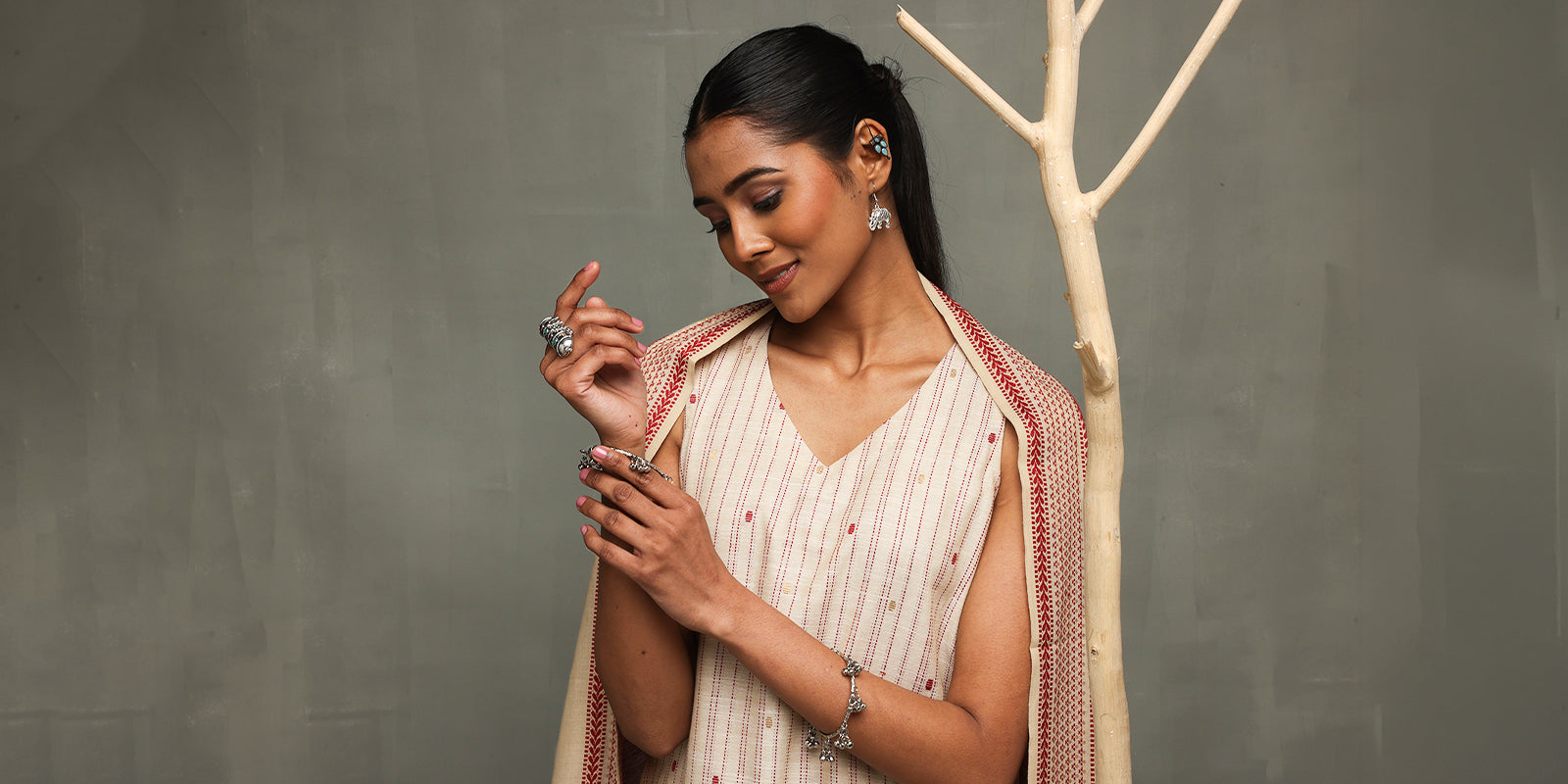
Shop The Look!

Handloom Sarees |

Handwoven Kurta Set |

Ethnic Handcrafted Dress For Women |

Handloom Co-Ord Set For Women |

Readymade Blouse For Sarees |

Ethnic Tops For Women |
Handloom Supports Real Artisans, Not Just Trends
One of the most beautiful aspects of handloom fashion is how it directly uplifts artisan communities while safeguarding India’s vibrant textile heritage.
Every handcrafted item plays a part in:
- Supporting weaving families
- Keeping traditional techniques alive
- Preserving regional crafts
- Sustaining cultural generational knowledge
From Jamdani and Chanderi to Banarasi weaving, Kantha, Ikat, and block printing, Indian textiles tell stories of geography, community, and inherited skill. These techniques are so much more than just decorative elements as they embody years of craftsmanship honed through patience and dedication.
By choosing handwoven clothing, we help these traditions continue to evolve naturally rather than fade away over time.
Ethical fashion also has a real impact on livelihoods. In India, many artisan networks consist of women-led weaving communities, family run workshops, and rural craft collectives that rely on these crafts for their income and stability.
When people opt for handcrafted garments instead of mass-produced ones, they contribute to:
- Better income opportunities
- Greater visibility for artisans
- More sustainable employment structures
Beyond just fashion, handloom symbolizes something deeper, clothing that connects us to real people, genuine skills, and stories that deserve to be cherished.
Why Are Modern Women Choosing Ethical Fashion?
The move towards ethical fashion isn’t just about being sustainable but it’s also about lifestyle. Today's women are choosing attire that feels:
- Breathable
- Comfortable
- Thoughtfully made
- Emotionally connected
- Less trend driven
Handloom fashion strikes the right chord with those who want to dress well today, as it is easy, beautiful, meaningful and wearable.
How to Identify Genuine Handloom Clothing?
If you’re on the hunt for authentic handloom pieces, pay attention to a few key details:
Look for Slight Irregularities: Handwoven fabrics often have interesting differences that tell their own story. If there are no variations in the fabric, it is likely to be a machine made fabric.
Feel the Fabric: Handloom fabrics have a unique charm of their own. They tend to be softer, more breathable, and have a wonderful texture that can't be replicated by synthetic alternatives.
Check Craft Details: Look for handwoven patterns, artisan touches, variations in texture and traditional weaving patterns.
Buy From Trusted Brands: Opt for brands that are open to sharing about artisan partnerships, craft techniques, sourcing of the fabric and slow production methods.
Conclusion
Even though handloom fashion can come with a higher price tag, maybe we've just grown accustomed to the unrealistic prices of mass produced clothing.
While handloom fashion may be more expensive, perhaps it's just that we've become used to the fact that mass produced clothes are priced unrealistically.
After understanding that handcrafted garments require a lot of time, work, skill and human touch, it is possible to change one’s attitude towards pricing. Handloom is a process, the heritage, the livelihood it sustains and the artistry it embodies.
Sutra's believes in this strongly and it is reflected in all of their collections with breathable fabrics, thoughtful silhouettes and artisans leading the way in craftsmanship that fits within your daily life. And this is what ethical fashion is all about.
FAQs
Why is handloom clothing more expensive than fast fashion?
Handloom clothing is made with manual weaving, showing artisan skills, are produced in smaller batches, and often created from premium fabrics which are the factors responsible for the increased production costs of handloom clothing.
What is the difference between handloom and machine-made fabric?
The handloom fabrics are woven by skilled artisans using traditional methods, whereas the machine made fabrics are produced in bulk. Handloom fabrics are one of a kind, with a touch of craftsmanship.
Why is ethical fashion becoming popular in India?
Consumer’s growing excitement in global fashion is due to awareness of sustainability, the well being of artisans, the quality of fabrics, and the importance of conscious shopping.